Saturday, July 16, 2016

(Samentha Ramdheen, the daughter of Nelson Padaychee, recently visited our home with her mother, brother, sister-in-law and their children. Samentha wanted to make contact with the Muniamma family after attending the funeral of Poobal Govender in Isipingo recently. Samentha attended the funeral with Nelson. It was really a wonderful gesture on the part of Samentha to make contact with us. She keeps in contact with us and wants to know more about her father's extended family.)

Wednesday, July 13, 2016

TRINIDAD AND TOBAGO - THE WEST INDIAN COUNTRY WHERE PEOPLE OF INDIAN ORIGIN MAKE UP A SIGNIFICANT PERCANTAGE OF THE TOTAL POPULATION. THEY WERE TAKEN TO WORK AS INDENTURED LABOURERS ON SUGAR PLANTATIONS

MAP OF TRINIDAD AND TOBAGO
TRINIDAD AND TOBAGO VETERAN JOURNALIST - PARAS RAMOUTAR BY SUBRY GOVENDER
(PARAS RAMOUTAR (EXTREME LEFT) WITH JOURNALISTS FROM OTHER PARTS OF THE WORLD IN FRONT OF THE TAJ MAHAL IN JANUARY 2009) During the recent visit of South Africa’s national cricket team to the West Indies – one would have noticed the number of Indian-origin spectators watching the matches along with their fellow black, white and mixed-race colleagues. The Indian-origin people are descendants of indentured labourers who were taken from various parts of India in the early 1800s to former colonies controlled by Britain, Holland and France. Some of the islands where Indian immigrants settled in large numbers are Guyana, Trinidad and Tobago and Suriname. In 2009 I had the opportunity of talking to journalists from these countries and Mauritius, Malaysia and Fiji about the lives of Indian-origin people. I was part of a group of 19 Indian-origin journalists who attended a Pravasi Bharati Divas conference in Chennai in 2009. I have already done radio documentaries on Guyana, Fiji and Malaysia, and Suriname and in this episode, I have a prepared a radio documentary on the island of Trinidad and Tobago, which is a former British colony. I spoke to Paras(Parasram)Ramoutar, an international journalist who writes and broadcasts extensively for radio, newspapers and television, in his home country, the Caribbean and worldwide. Mr Ramoutar is the Caribbean correspondent for the Indo Asian News Service(IANS), the Indiandiaspora.com, and India Empire.

(PARAS RAMOUTAR (BACK) WITH JOURNALISTS ANAND MALOO OF MAURITIUS AND SUBRY GOVENDER IN NEW DELHI IN 2009)
(PARAS RAMOUTAR AND OTHER JOURNALISTS FROM THE INDIAN DIASPORA IN 2009)

Tuesday, July 12, 2016

HIV-AIDs STILL A SERIOUS PANDEMIC IN SOUTH AFRICA

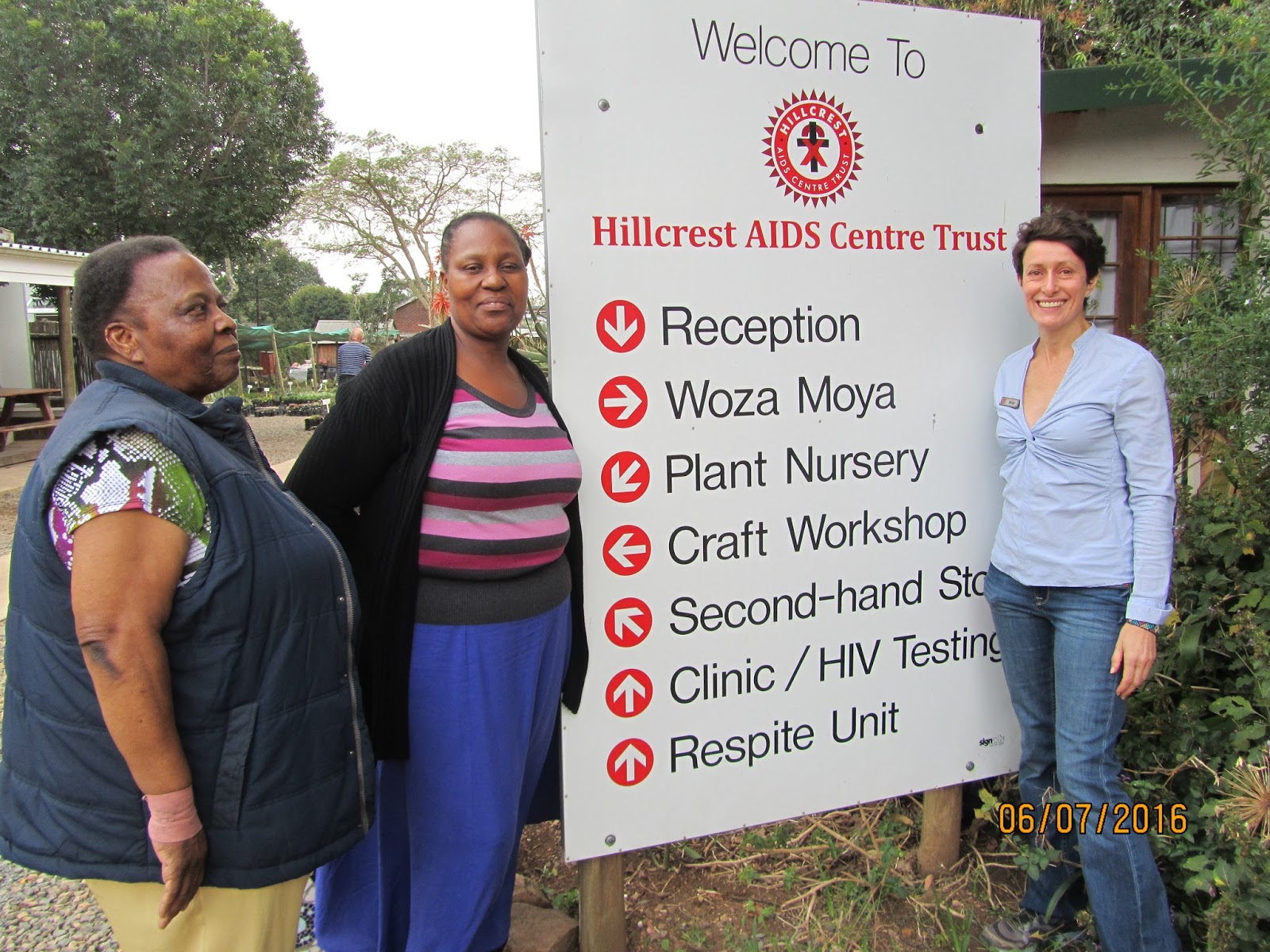
(Mrs Cwengekile Myeni, manager of the Hillcrest Aids Centre Gogo group, Mrs Phindiwe Mashiloane, assistant manager, and Ms Rebekka Stredwick, Volunteer Gogo Group)
(TEENAGERS ATTENDING AN EDUCATION PROGRAMME ON HIV-AIDs AT THE HILLCREST AIDS CENTRE, NEAR DURBAN, IN SOUTH AFRICA A FEW DAYS BEFORE THE START OF THE INTERNATIONAL AIDS CONFERENCE) INTRODUCTION: For the second time in 16 years, South Africa will be hosting the International Aids Conference from July 18 to 22 to place the spotlight on one of the most-deadliest pandemics to afflict the world. More than 20 000 delegates from Africa and other parts of the world will descend on the coastal city of Durban to highlight the effects of the HIV-AIDs virus and to work together to combat the disease. Since the last conference in the city in 2 000, South Africa has made tremendous strides in curbing and controlling the disease through the introduction of anti-retroviral drugs and various educational and social programmes. Subry Govender travelled to a rural area regarded as the epicentre of Aids in the province of KwaZulu-Natal and compiled this report on the situation in South Africa today to coincide with the International Aids conference.
(TEENAGERS ATTENDING AN HIV-AIDs EDUCATION PROGRAMME AT THE HILLCREST AIDS CENTRE) About 30km to the west of the ICC conference centre in Durban, where the International Aids Conference is going to take place between July 18 and 22, is the Hillcrest Aids Centre. This non-government organisation was started in a small building by the local Methodist Church 26 years ago at a time when little was known about the HIV-AIDs virus or its impact on the people. The religious Minister and his colleagues were concerned about the implications and immediately set about providing care, comfort and support for the people who were being affected by the disease. Over the years since 1990, the Hillcrest Aids Centre has developed into becoming a massive non-government organisation doing magnificent and magnanimous work in contributing to the welfare of the afflicted and providing educational, social and support programmes for the affected and the community at large. The organisation concentrates its humanirarian and prevention campaigns in a rural area known as the Valley of Thousand Hills, near where its offices are situated. Hundreds of thousands of the more than a million people who live in this district are understood to be affected by the HIV virus and tens of thousands of others are reported to have succumbed to the disease. The Valley of Thousands Hills is reported to be, not only the epicentre of the Aids pandemic in the province of KwaZulu-Natal, but also in the whole of South Africa. This, despite the wide-scale introduction of anti-retroviral drugs and education programmes such as condom use, circumcision and safe sex over the past decade or so. The Hillcrest Aids Centre is one of scores of non-government organisations and movements that operate alongside the South African Government in providing health care to the more than 6,8-million people who are afflicted with Aids in South Africa. I visited the area on Wednesday, July 6, about 12 days before the start of the Aids Conference, on a day when about 50 young people, both boys and girls, were participating in an awareness programme on HIV-AIDs. “What we are hoping to achieve is to have an HIV-free generation one day.”
(Mr Sibusiso Mthethwa – Education Manager at the Hillcrest Aids Centre - WITH THE FUND-RAISING MANAGER MS CLAIRE HODGKINSON) The Education Manager of the Hillcrest Aids Centre, Mr Sibusiso Mthethwa, told me the youth programme was aimed at empowering teenagers to become fully informed about the dangers of the HIV-AIDs virus. “We are actually educating young people,” he said, “on healthy lifestyle, positive lifestyle and HIV knowledge”. “It is very important and crucial that we educate and teach these young people about HIV-AIDs so that they will prevent the infection. What we are hoping to achieve is to have an HIV-free generation one day.” Mr Mthethwa said their educational programme also involved visiting schools and other institutions to make teenagers and the people at large about the dangers of “unsafe sex”. He said: “We also go out to schools where we teach young people in primary schools and high schools about HIV-AIDs, about how to prevent HIV-AIDs, how important it is to know your status. It is important and crucial that they know their status so that when they get older and when they get into relationships, they are able to say NO to unprotected sex.” GOGO OR GRANNY’S PROJECT
(Cwengekile Myeni, manager of the Gogo Project, Phindiwe Mashiloane, assistant manager, and Rebekka Stredwick, Volunteer) In addition to the education programme for teenagers, the Hillcrest Aids Centre, which is funded by well-wishers from countries as far afield as Germany and the United States, also operates, among other community work, a Gogo or Granny’s programme. This involves providing support and assistance to elderly women in the district who had been burdened to take care of their grand-children following the deaths of their own children through the AIDs pandemic. The assistant manager of the Gogo Project, Ms Phindiwe Mashiloane, said the situation was acute. She said: “The grannies are suffering a lot because they are now getting a pension which is very, very little. They can’t even take care of their grand-children. So what we are doing is, we are supporting the grannies to participate in various jobs to increase their income in their house-hold. We support them by telling them to do work such as hand work and the block-making – the projects that can support them.” She said the pandemic was increasing all the time because many of the people don’t want to change their behaviour. “Now they take for granted,” she said,”that there are ARVs and they can behave any how they like”. “Then those who have HIV say they don’t care and then just continue doing things without any concern for others. “We are now trying to change this type of behaviour.” Ms Mashiloane said one of the reasons for the “don’t care attitude” was that people were unemployed and found themselves to be caught up in poverty. “Even the youth, the out of school youth they learn and pass their matrics, others are graduates they don’t get work. This is the main, main, main problem that we have in our communities,” she said.
(Cwengekile Myeni, manager of the Gogo Project, Phindiwe Mashiloane, assistant manager, and Rebekka Stredwick, Volunteer) The manager of the Gogo Project, Ms Cwengekile Myeni, said despite the work they were undertaking in the community, they found it discouraging that people were still being infected by the HIV-AIDs virus. “It’s really, really discouraging that people are still getting infected but then we don’t need to lose hope. We still need to work hard and educate people, especially women. I think women have to be taught and empowered that this is their body and they need to take of their bodies.”
(Ms Claire Hodgkinson, Fund-Raising and Marketing Manager, WITH COLLEAGUES MS PAMELA MTSHALI AND MS THANDEKA ZUNGU) MANY STRIDES HAVE BEEN MADE BUT THE SITUATION TODAY IS STILL EXTREMELY SERIOUS The Fund-Raising and Marketing Manager of the Hillcrest Aids Centre is Ms Claire Hodgkinson. She told me that there had been definite strides in controlling the effects of the pandemic through a number of health, educational and social programmes. But the situation today was still serious in their region. “The situation today is still extremely serious, particularly where we work here in the Valley of a Thousand Hills, which is a very rural and is rife with poverty and unemployment. It is considered as one of the epicentres of the HIV-AIDs pandemic here in South Africa. It is believed that in some of these communities in the Valley infection rate is as high as 40 to 60 percent, which is staggering. There is hardly any one here in our rural areas that don’t know any one that has been impacted by the disease.” WORK THEY DO Ms Hodgkinson said their work involved providing “unconditional love and hope to those impacted by HIV-AIDs”. “Essentially we take a very holistic approach in treating those people affected by HIV-AIDs. So we provide care and treatment to those who are infected and we provide counselling and support to their families, particularly those who are most vulnerable – the children and grand-mothers. We also look at empowering them financially through income-generating and community outreach and upliftment programmes.” 24 – BED RESPITE UNIT FOR THE SERIOUSLY-ILL The Hillcrest Aids Centre also operated a medical care for seriously-ill patients. “We currently have a 24 bed respite unit here at our centre,” she said, “and we currently have 22 patients in our unit”. “Twenty one of them have TB in addition to being HIV positive and we have one gentleman with MDR TB as well. Because of this we have very strict protocol in terms of access to our units and our team is specifically trained to look after those patients.” She added: “I think definitely we are making great strides now, especially with the accessibility of ARV medication throughout South Africa. Here at the Hillcrest Aids Centre alone we have seen amazing results in terms of our respite units, we get about 200 patients a year who come to our respite units. And currently over 70 percent of them are getting well enough to return home to their families through the care, treatment and initiation on to the ARVs that they are able to get here at our centre.”
(Ms Claire Hodgkinson, Fund-Raising and Marketing Manager, WITH COLLEAGUES MS PAMELA MTSHALI AND MS THANDEKA ZUNGU) URGENT DRAMATIC BEHAVIOURAL CHANGES NEEDED Ms Hodgekinson said there must be dramatic behavioural changes in people for the HIV-AIDs virus to be fully overcome. “It’s going to take some time to completely eradicate the disease because it is a social disease,” she said. “It’s a very complex disease. It touches on many different aspects of our lives. It’s not just a medical issue. When you are talking about very personal issues such as sex and inter-personal relationships and changing people’s attitudes and behaviour, it’s challenging, it’s really, really challenging. “And that’s why it’s important that we continue with our prevention and education programmes, especially with the younger generation. The earlier that we can teach people about positive lifestyles and good behaviour and safe behaviour, the better we will be.”
(Professor Jerry Coovadia, Director of the Maternal, Adolscent and Child Health - MATCH) One of the senior HIV-AIDs research specialists in South Africa is Professor Jerry Coovadia, the Director of the Maternal, Adolescent and Child Health (or MATCH) – attached to the School of Public Health at the University of the Witwatersrand in Johannesburg. He was previously attached to the Medical School at the University of KwaZulu-Natal. Professor Coovadia was the Chairperson of the Aids Conference that was held in Durban in 2 000. During the forthcoming conference, he will be delivering a number of papers on the treatment and prevention of the pandemic. SOUTH AFRICA HAS MADE ENORMOUS PROGRESS Professor Coovadia told me that South Africa has made enormous progress in curbing and providing treatment to affected people. For instance South Africa has the largest anti-retroviral programme in the world with more than three million people on ARV treatment. But, he said, it was going to take some time in completely eradicating the disease. “I think we have gone a long way,” he said. “I mean we have made enormous progress globally and in South Africa, so there’s no doubt about that and we will continue to make progress. “To really eradicate it is going to be a long job but it’s not impossible given the advances in medicine, given the advances in what we know about genes and how genes can affect it, given our advances in the best forms of treatment and very important too is prevention – circumcision prevents, condoms prevents, change in sexual behaviour, monogamy prevents and so on. So I think it is possible but it is going to take a long time.” Although more than a million people had succumbed to the HIV virus since the pandemic broke out in the 1980s, the death rate today had been drastically reduced because of the various treatment and prevention programmes that are being carried out. MOTHER-TO-CHILD INFECTION HAS DROPPED DRAMATICALLY He was most impressed with the success they had achieved in bringing down the mother-to-child infection rate. “The transmission rate used to be from the late 1980s to the 1990s for every 100 HIV positive women about 30 to 32 of the babies were infected. The figure now is phenomenally low, it’s under two percent - two out of every 100 women. So for every 100 HIV positive women under two babies are infected, which is like almost eliminating the disease.” DESPITE THE SUCCESSES HIV-AIDS WAS STILL SEVERE IN SOUTH AFRICA Professor Coovadia said the situation of the HIV-AIDs pandemic was still quite severe in South Africa. “It’s still quite severe. If you take it globally, we probably still have the worst epidemic rate. Not only is the country most seriously affected than anywhere else in the world, it so happens that KwaZulu-Natal is the most seriously affected province for very many reasons. Those are really historical reasons about employment, migration of workers in mines and so on and the dislocation of established families. “As I said we have the biggest epidemic in the world, it’s in excess of six million. But because of the reasonably good infrastructure we had, I think it has gone down now, in the public sector we have been able to win many battles against HIV-AIDs. The biggest battles is to keep down the numbers and keep down the deaths and we have succeeded quite substantially in that way.” The International Aids Conference is going to attract more than 20 000 people from the rest of the African continent and other parts of the world. It’s hoped that their participation will contribute to the control and complete eradication of one of the most-deadliest diseases in more than a century.

Sunday, July 10, 2016

INDIAN PRIME MINISTER ACKNOWLEDGES VETERAN STRUGGLE STALWARTS AND INDENTURED INDIAN LABOURERS

(PRIME MINISTER NARENDRA MODI OF INDIA HOLDING THE HANDS OF VETERAN FREEDOM FIGHTERS, KAY MOONSAMY(LEFT) AND SWAMINATHAN GOUNDEN (RIGHT). ON THE RIGHT IS THE PREMIER OF THE PROVINCE, MR WILLIS MCHUNCU) By Subry Govender Indian Prime Minister, Mr Narendra Modi, greeted and paid tribute to two veteran struggle stalwarts who attended a reception organised in his honour at the Durban City Hall on the afternoon of Saturday, July 9.
(PRIME MINISTER MODI TALKING TO MR KAY MOONSAMY) Mr Modi walked up to 90-year-old Kay Moonsamy and 89-year-old Swaminathan Gounden and shook their hands at the end of the function organised by the Ethekwini Municipality.
(PRIME MINISTER MODI TALKING TO SWAMINATHAN GOUNDEN) Moonsamy and Gounden were earlier introduced by the programme director, Mr Ravi Pillay, MEC, as two freedom fighters who participated in the Passive Resistance Campaign in 1946 while they were still in their early teens. The two veterans later joined the Natal Indian Congress(NIC), the South African Communist Party(SACP), the ANC, and other organisations that fought for the non-racial democracy and freedom that South Africans enjoy today. For their efforts, they were among the thousands of activists who were banned, detained, house-arrested, jailed and forced into exile by the former apartheid regime.
(PRIME MINISTER MODI WITH PREMIER WILLIS MCHUNU AND MR KAY MOONSAMY AND SWAMINATHAN GOUNDEN) Mr Modi had also on Friday acknowledged the contributions of Mr Ahmed Kathrada and other freedom fighters at a function at the Nelson Mandela Foundation in Johannesburg. Before his address to the invited guests at the Durban City Hall, Mr Modi visited the Pietermaritzburg Railway Station where Mahatma Gandhi was thrown of a train for sitting in a “whites-only” coach. He also visited the Mahatma Gandhi Phoenix Settlement in Inanda, north of Durban.
(MR KAY MOONSAMY AND MR SWAMINATHAN GOUNDEN AFTER PRIME MINISTER MODI GREETED AND ACKNOWLEDGED THEM) During his address to the people at the City Hall, he surprised most of those present by offering the greeting of not only “Namasthe”, but also “Vanakkam” and “Sanibonani”. He also recognised and acknowledged the first Indians who were brought to work as indentured labourers or “slaves” on the sugar plantations of the then Natal Colony in 1860. “It was here in 1860 that the first Indians landed in South Africa. On 16th November 1860 the ship Truro touched the shores of KwaZulu-Natal with 342 Indians. I learnt that the first people to get down the ship were Ngaru, his wife and two small daughters. Today, more than 150 years later, Durban has the largest concentration of people of Indian origin outside India. “Their suffering under apartheid and colonial rule is well known. But against all odds they preserved their culture and values. And today they are very successful and proud citizens of this great country.”
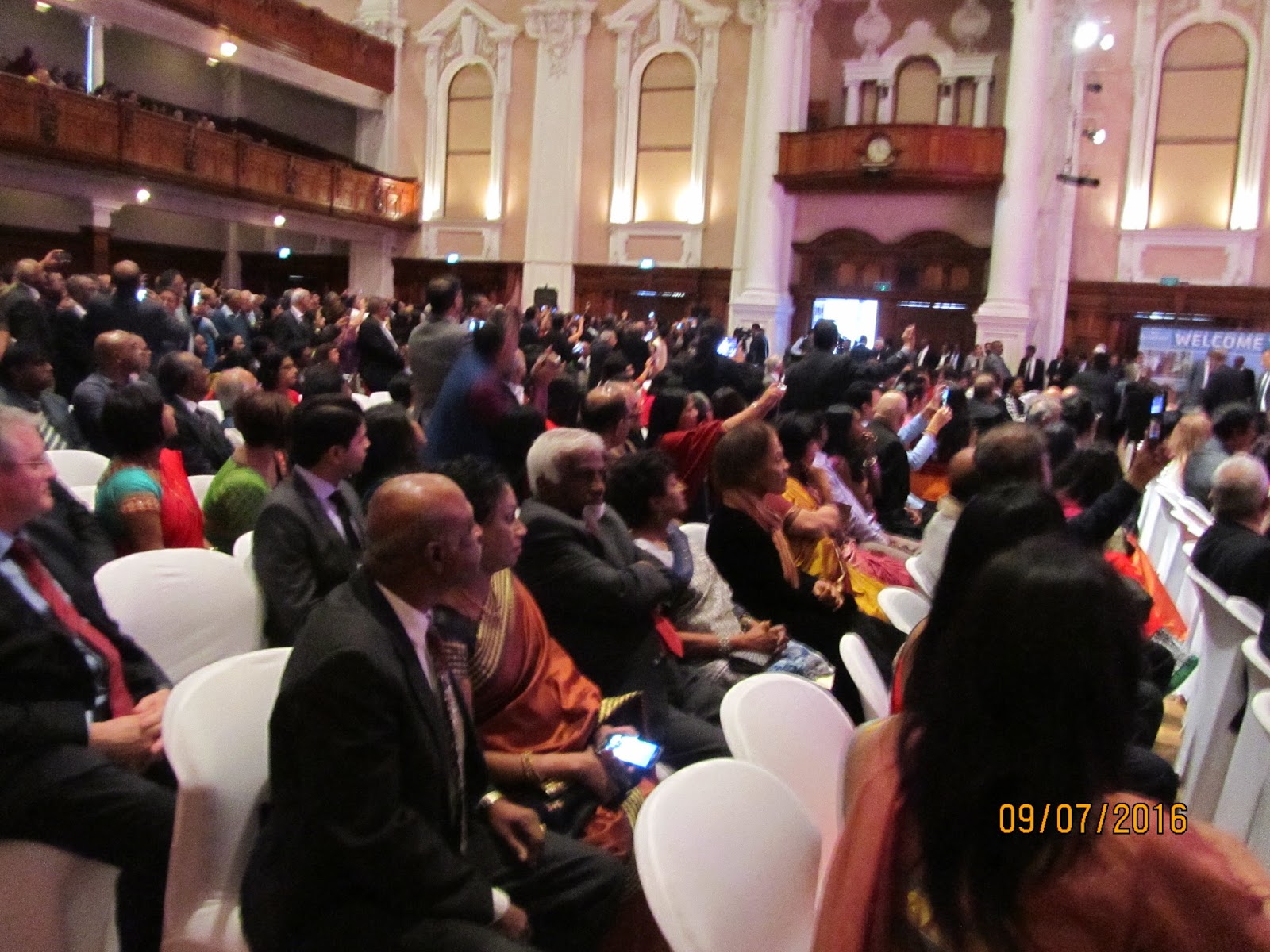
(SOME OF THE INVITED GUESTS)
(MORE GUESTS AT THE FUNCTION) Modi said they were contributing to their country in the fields education, scientific research, judiciary and the economy. . They did not live for themselves only but contributed enormously to the welfare of the poor and under-privileged. This reference to the indentured Indians came as a surprise to many people because the impression was created that Modi or the Indian Government did not recognise or care about those who left their motherland to start a new life in the then Natal Colony as indentured labourers. For instance no efforts were made for Modi to visit one of the sugar estates where the indentured labourers had started their new lives in South Africa.
(GUESTS WELCOMING PRIME MINISTER MODI BY TAKING PICTURES)
(Premier of KwaZulu-Natal Province, Mr Willis Mchunu, standing next to Swaminathan Gounden and Prime Minister Modi) Earlier, the Premier of the KZN province, Mr Willis Mchunu, in his address welcoming Modi to KwaZulu-Natal, paid tribute to the people of Indian origin for their enormous contributions to the development of KwaZulu-Natal and South Africa as a whole. He said the people of Indian descent had made enormous contributions to the social, political, economic, educational and other fields of development. He said the people of Indian origin “are part of all of us and this country belongs to them”. He said he hoped when Modi returned to India he would have returned with very good memories of the country.
(KING GOODWILL ZWELITHINI PRESENTING A GIFT TO INDIAN PRIME MINISTER, NARENDRA MODI) King Goodwill Zwelithini, who also welcomed Modi to the province, encouraged the Indian Prime Minister to assist in the further development of the province, especially in the fields of agriculture and over-coming the HIV-AIDs pandemic. As a final gesture, the King presented Modi with a gift.
(Some of the invited guests lining up and security checked before being allowed into the Durban City Hall)

Friday, July 8, 2016

MRS SAVUNDALAI PADAYCHEE - A SECOND GENERATION DESCENDANT OF INDENTURED SUGAR CANE LABOURERS CELEBRATES HER 89TH BIRTHDAY TODAY

JULY 8 2016
(MRS SAVUNDALI PADAYCHEE - SECOND FROM RIGHT - IS SEEN WITH LAST SURVIVING SISTER-IN-LAW MRS SOUNDLER GOVENDER, SISTER MRS AMOY PADAYCHEE AND ELDER BROTHER, MR MUNSAMY ISAAC GOVENDER DURING THE FAMILY RE-UNION IN JANUARY 2016)
(MRS SAVUNDALAI PADAYCHEE - EXTREME RIGHT - SEEN WITH HER LATE BROTHER, PERCY GOVENDER, LATE ELDER SISTER, SALATCHI SUBRAMONEY, AND MR MUNSAMY ISAAC GOVENDER AT A MUNIAMMA FAMILY GATHERING)
(SOUNDLER,SECOND FROM LEFT) WITH HER LATE SIBLINGS PATCHA, SALATICH, NADASEN AND PERCY. ISAAC UNCLE IS SECOND FROM RIGHT.) One of the three surviving second generation descendants of our indentured labourers ancestors, Mrs Savundalai Padaychee, celebrates her 89th birthday today. Mrs Padaychee, who lives in her home in the Northern KwaZulu-Natal town of Dundee, was born in the Dayal Road area of Clairwood, south of Durban, on July 8 1927. She was one of 14 children of Muniamma and Coopoosamy Govender, who settled in the Dayal Road area as market gardeners after their indentured parents completed their 10-year grimmits in the former Blackburn and Mount Edgecombe sugar estates respectively. Mrs Padaychee, who grew up in the Clairwood area, is now one of three children who are still around. The others are Mr Munsamy Isaac Govender is 94-years-old and lives in Pietermaritzburg with his daughter, Ruth, and Mrs Amoy Moodley, is 80-years-old and lives in Unit Three, Chatsworth. Mrs Padaychee, who has visited the land of her forefather and mother in India many times, was married to Shunmugam “Sunny” Padaychee of Dundee at an early age. They had seven children. One of the boys, Nickel, died a few years ago. Mrs Padaychee has a number of grand-children and great-grand-children. Early this year, Mrs Padaychee made a special trip to Durban to attend a family re-union organised by the Muniamma Social Club (Business) to pay tribute to the three surviving children of our ancestors. Thyna and I telephoned Mrs Padaychee this morning and wished her well on her 89th birthday on behalf of all the extended family members of the Muniamma brood who number more than 500 today. She was very happy to hear from us and asked that the Muniamma family must continue to keep in contact and promote the values, cultures, traditions, languages and music of our ancestors. We want to wish Mrs Padyachee many more happy returns and at the same time also greet her other surviving siblings, Mr Munsamy Isaac Govender and Mrs Amoy Moodley.

Wednesday, July 6, 2016

NEW PROGRESSIVE PEOPLES’ ORGANISATION – ACTIVE CITIZENS’ MOVEMENT (ACM) – TO BE LAUNCHED IN DURBAN IN OCTOBER

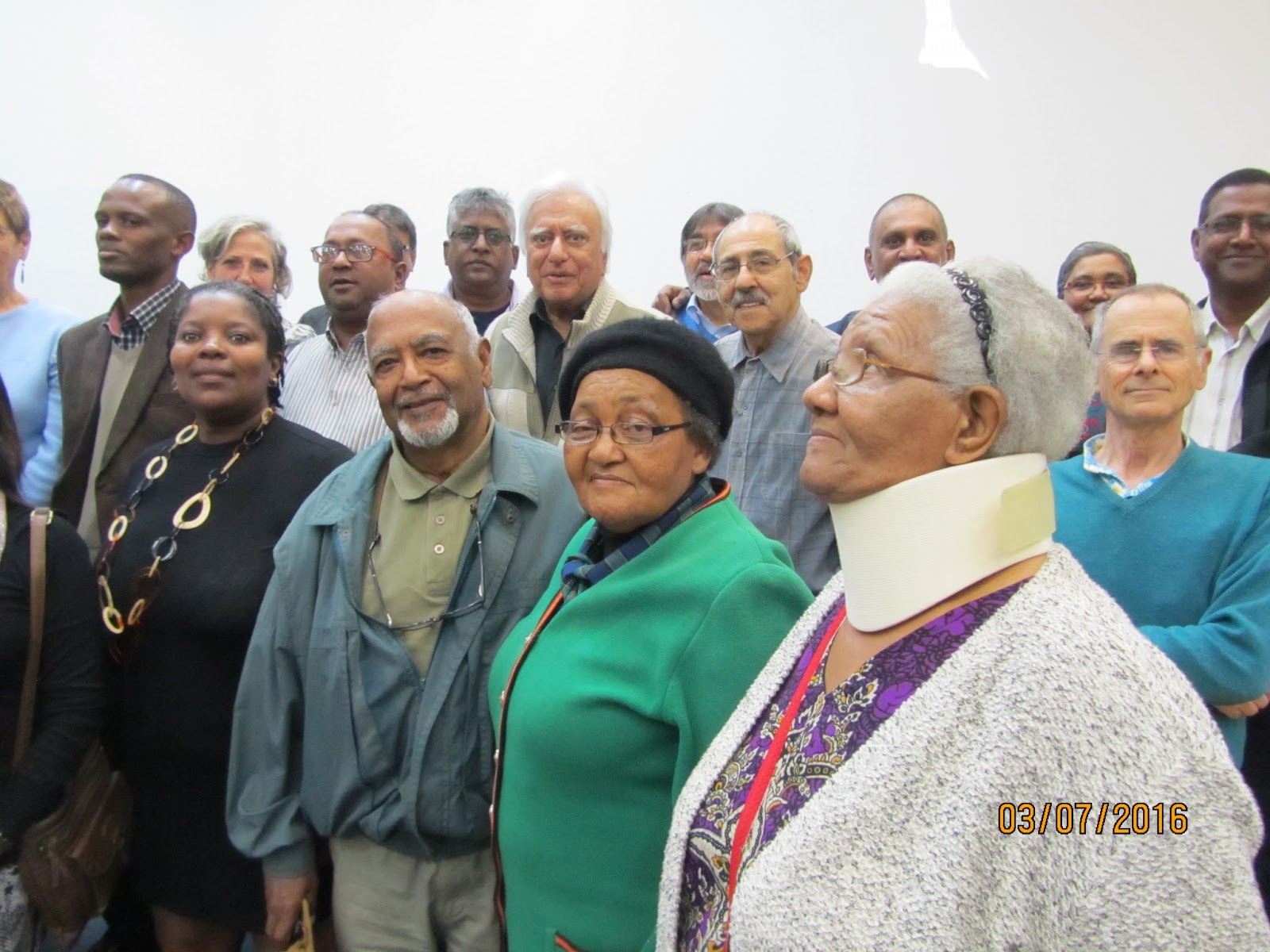
By Subry Govender A new citizens’ forum, initiated by former anti-apartheid leaders and activists, is to be officially launched in five months’ time in October to contribute to the values and principles of the country’s new democratic and non-racial Constitution and Bill of Rights. The decision to launch the Active Citizens’ Movement(ACM), formerly known as the United Citizens’ Forum, was taken at a workshop held at the Durban University of Technology(DUT) on Sunday, July 3. The new initiative was first mooted seven months ago after former anti-apartheid activists and leaders expressed their disillusionment and disappointment at the absence of organisations such as the United Democratic Front(UDF) and the Natal Indian Congress(NIC) in the new democratic order.
Some of the anti-apartheid activists who took part in the workshop on Jukly 3 included Yusuf Vawda, Siva Naidoo, Ms Eunice David, Professor Jerry Coovadia, Dr Farouk Meer, former Judge, Thumba Pillay, Dr Dilly Naidoo, Swaminathan Gounden, Ms Ela Gandhi, Paddy Kearney, Dr Crispin Hemson, Ms Coral Vinsen, and Fishy Maharaj.
Mr Vawda, who played a leading role as a community and political activist during the anti-apartheid days along with, among others, Pravin Gordhan, now Minister of Finance, and the late Yunus Mahomed, was the chairperson of the workshop. He articulated the inputs and concerns of the people who moved for the establishment of the new pressure group that would operate along the same lines as anti-apartheid organisations prior to 1994. The Active Citizens’ Movement(ACM) would be a non-political organisation that would contribute to the creation of a socially-cohesive and egalitarian society, based on the values of South Africa’ Constitution and the Bill of Rights.
“The ACM will help to strengthen participatory democracy through programmes that eliminate obstacles to equality and strengthen good governance, transparency, accountability and sustainability,” said Vawda. “The ACM’s values are non-racism and non-sexism, a commitment to social, economic and environmental justice, appreciation for diversity, integrity, honesty and respect, and a commitment to resolving issues through peaceful action. “As a movement not aligned to any political party, the ACM will co-operate with, challenge and lobby government and the private sector in the pursuit of our goals. “The new movement will also collaborate with and strengthen civil society, specifically NGOs and communities. “We aim to form a broader network based on collaboration and not competition to bring about a truly non-racial, democratic, socially-cohesive and egalitarian society.” The emergence of the Active Citizens’ Movement is a clear indication that many former anti-apartheid activists and leaders are disillusioned with the lack of values and principles among many who occupy important positions today. Many people believe such a progressive organisation in the new non-racial and democratic South Africa is long overdue. Ends – Subry Govender July 3 2016

Friday, July 1, 2016

SURINAME - THE WEST INDIAN COUNTRY WHERE PEOPLE OF INDIAN ORIGIN WERE TAKEN TO WORK AS INDENTURED LABOURERS ON SUGAR PLANTATIONS

BY SUBRY GOVENDER During the recent visit of South Africa’s national cricket team to the West Indies – one would have noticed the number of Indian-origin spectators watching the matches along with their fellow black, white and mixed-race colleagues. The Indian-origin people are descendants of indentured labourers who were taken from various parts of India in the early 1800s to former colonies controlled by Britain, Holland and France. Some of the islands where Indian immigrants settled in large numbers are Guyana, Trinidad and Tobago and Suriname. In 2009 I had the opportunity of talking to journalists from these countries and Mauritius, Malaysia and Fiji about the lives of Indian-origin people. I was part of a group of 19 Indian-origin journalists who attended a Pravasi Bharati Divas conference in Chennai in 2009. I have already done radio documentaries on Guyana, Fiji and Malaysia and in this episode, I have a prepared a radio documentary on the island of Suriname, which is a former Dutch colony. I spoke to journalist, Ms Indra Toelsie, who is a veteran journalist in the Suriname capital of Para Maribo, about Indian-origin people on the island.
(INDRA TOELSIE OF SURINAME IN BLACK SHORT AND PANTS WITH OTHER JOURNALISTS FROM THE INDIAN DIASPORA)