BY SUBRY GOVENDER
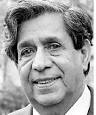
In my ongoing series on “Struggle Heroes and Heroines”, I have the pleasure of recalling the role and struggles of veteran activist, writer, journalist, trade unionist, educationist and lawyer, Ismail Chota Meer, who was popularly known as I C Meer.
I am publishing a radio documentary on the contributions by I C Meer for a non-racial and democratic South Africa at a time when many former political activists and veterans are discussing the recently-held 6th democratic general elections on May 8 2019. They are especially concerned that many people decided not to vote because they were not comfortable with the political parties that contested the elections. Many, many young people also did not care to register to vote in the elections.
I C Meer passed away on 1 May 2 000 at the age of 82 after serving the African National Congress in the KwaZulu-Natal Provincial Assembly since the dawn of our new era on April 27 1994.
I had the privilege of interviewing Mr Meer for this radio documentary at his Durban home while he was still a member of the KZN Provincial Assembly.
Mr Meer, who was born in 1918 in the small Natal town of Waschbank, near Dundee, completed his high school at the famous and historical Sastri College in Durban and obtained his law degree at the University of the Witwatersrand in 1946.
While at university in Johannesburg he came under the influence of Dr Yusuf Dadoo, who was president of the Transvaal Indian Congress at this time. He also be-friended Nelson Mandela, Walter Sisulu, Oliver Tambo and other political activists.
Mr Meer became involved with the Transvaal Indian Congress as its secretary in 1945, the South African Indian Congress, Natal Indian Congress and the South African Communist Party.
He also participated in the 1952 Defiance Campaign and was among the Congress leaders arrested for treason in December 1956, but charges against him were dropped in early 1958.
At the same time, he was a committed writer and journalist. He edited the Passive Resister during the passive resistance campaigns in 1946 and during the height of the struggles in the 1950s, 1960s, 1970s, and 1980s he wrote under various names for the Leader newspaper in Durban and other publications because of the banning orders imposed against him by the apartheid regime. He suffered this inhumanity for nearly 40 years.
Despite the restrictions and banning orders against him, Mr Meer, who was married to another struggle activist, Professor Fatima Meer, managed to run his law practice in the town of Verulam, about 25km north of Durban. It was here in Verulam that I first came into contact with him while I was a pupil at the local high school. Most people in the town and elsewhere saw Mr Meer not only as a role model but also as an inspiration against the former apartheid regime.
His full life history and involvement in the struggles is contained in book, titled : "Ismail Meer - A Fortunate Man". The book was published by his wife, Professor Fatima Meer, and the Meer family.
In this radio documentary published below, Mr Meer highlights, in his own words, the struggles for the creation of a non-racial and democratic future South Africa.
Monday, May 20, 2019
Friday, May 17, 2019
STRUGGLE STALWART AHMED KATHRADA'S FIRST RADIO INTERVIEW AFTER HE WAS RELEASED FROM LIFE IMPRISONMENT IN COTOBER 1989. THE INTERVIEW IS BEING PUBLISHED HERE IN THREE PARTS ON THE DAY A LIFE-SIZE STATUE OF HIM WAS UNVEILED TODAY (MAY 17 2019)
(IN THE TOP PICTURE AHMED KATHRADA IS AT THE HOME OF A FAMILY MEMBER IN LENASIA, JOHANNESBURG, AFTER HE WAS RELEASED IN OCTOBER 1989. THE PERSON NEXT TO HIM WAS ANOTHER POLITICAL ACTIVIST, CASSIM SALOJEE. UNFORTUNATELY HE IS NOT SEEN IN THE PHOTO)
(IN THE SECOND PICTURE, AHMED KATHRADA IS SEEN WITH A FORMER GOVERNMENT SPOKESPERSON DURING A VISIT TO INDIA. KATHRADA JOINED NELSON MANDELA DURING HIS FIRST OFFICIAL VISIT TO INDIA IN 1995)
One of South Africa’s veteran struggle activists, Ahmed Kathrada, was bestowed with one of the country’s highest honours today (May 17 2019) when a life-size bronze statue of him was unveiled at the Maropeng Visitor Centre, Cradle of Humankind World Heritage Site, west of the city of Johannesburg.
Kathrada, who was imprisoned for more than 26 years after being convicted of high treason along with Nelson Mandela, Walter Sisulu, Govan Mbeki, and other activists, passed away at the age of 87 on March 28 2017.
The ceremony was led by the National Heritage Project, led by Dali Tambo, the son of Kathrada’s fellow Robben Island prison leader, Oliver Tambo.
Kathrada’s statue formed part of other scultures erected to honour former struggle stalwarts. They include Nelson Mandela, Oliver and Adelaide Tambo, Walter and Albertina Sisulu, Helen Suzman, Mirriam Makeba, Govan Mbeki, Beyers Naude, and Joe Slovo.
When Kathrada was released in October 1989 along with Walter Sisulu, Govan Mbeki, Raymond Mahlaba, Elias Motsoaledi and Andrew Mlangeni, I was working for the Press Trust of India as its free-lance correspondent in South Africa.
I made arrangements with some close associates and family members of Kathrada to interview him as he had his roots in India. I travelled to Johannesburg and had the privilege of talking to Kathrada about his life and his struggles for a non-racial and democratic South Africa at a family home in Lenasia. I recall that another political activist, Cassim Salojee, was present at the time I conducted the interview with M r Kathrada.
In order to provide some information about the life of Kathrada, I am publishing the interview in three parts here:
PART ONE
PART TWO
PART THREE
PART TWO
PART THREE
Wednesday, May 15, 2019
THE VIEWS OF MEWALAL RAMGOBIN – ONE OF SOUTH AFRICA’S COMMITTED ANTI-APARTHEID LEADERS DURING THE STRUGGLES FOR A NON-RACIAL AND DEMOCRATIC ORDER - ON A FORUM OR A RESUSCITATED NATAL INDIAN CONGRESS TAKING UP ISSUES OF CONCERN TO THE PEOPLE
BY SUBRY GOVENDER
Now that many South Africans of Indian-origin are discussing the political situation after the 6th democratic elections on May 8 2019 and after 25 years of democracy, I would like to bring you the views of Mewalal Ramgobin, who played a leading role in the early 1970s in the revival of the Natal Indian Congress.
The revived NIC played a major role in the struggles for liberation in the absence of the ANC and other progressive organisations that were banned by the former apartheid regime.
But in 1994, when South Africans were preparing for the country’s first democratic elections, the NIC was forced to shut shop after an agreement was reached that the ANC would represent and promote the aspirations of all South Africans.
Ramgobin, who died at the age of 84 on Monday, Oct 17 2016, was one of the NIC leaders who supported the move for the people to throw their lot with the ANC.
(MEWA RAMGOBIN WITH ARCHBISHOP DENIS HURLEY AT ONE OF THE BRIEFINGS AGAINST THE FORMER APARTHEID REGIME)
Beside the revival of the NIC, Ramgobin was best known for initiating the campaigns for the release of Nelson Mandela and other political leaders in 1971, the promotion of the values and principles of Mahatma Gandhi at Gandhi’s Phoenix Settlement Trust, north of Durban; the establishment of the UDF in August 1983, the promotion of the struggles to international levels by occupying the British Consulate for several months in 1983, isolating apartheid opportunists and for playing a major role during the negotiations process from the early 1990s to 1994 when the new democratic order was established.
For his involvement in the struggles, Ramgobin was hounded, harassed, targeted with a parcel bomb, and banned and house-arrested for nearly 20 years from 1970 to 1990. He was also detained and charged with High Treason in 1985
.
Ramgobin became a member of parliament for the ANC in 1994 and occupied this position until his retirement in 2009.
I interviewed Ramgobin in 2008 and asked him for his views about a Forum or for a resuscitated NIC to take up issues of concern to people of Indian-origin in the new democratic South Africa.
I compiled this radio documentary after talking to him about the concerns of many people. (ends - subrygovender@gmail.com May 15 2019)
Monday, May 13, 2019
THE NATAL INDIAN CONGRESS SHOULD HAVE BEEN ALLOWED TO OPERATE ALONGSIDE THE ANC
ONE OF THE MOST PROMINENT ANTI-APARTHEID LEADERS DURING THE DARK DAYS OF RACIAL OPPRESSION IN SOUTH AFRICA WAS PROFESSOR FATIMA MEER. A SOCIOLOGIST, ACADEMIC, AUTHOR, WRITER AND A CONFIDANTE OF WINNIE AND NELSON MANDELA AND OTHER STRUGGLE STALWARTS, PROFESSOR MEER ALSO MADE ENORMOUS CONTRIBUTIONS IN THE STRUGGLES FOR A NON-RACIAL AND DEMOCRATIC SOCIETY. DURING MY LONG YEARS AS A JOURNALIST DURING THE STRUGGLE DAYS, I HAD REGULARLY INTERACTED WITH PROFESSOR MEER AND CONTINUED TO KEEP IN CONTACT WITH HER AFTER WE GAINED OUR FREEDOM IN 1994. IN ONE INTERVIEW AT HER HOME IN DURBAN IN 2008, PROFESSOR MEER WAS OF THE VIEW THAT THE HISTORICAL NATAL INDIAN CONGRESS SHOULD NOT HAVE BEEN DISBANDED. SHE WAS OF THE VIEW THAT THE NATAL INDIAN CONGRESS SHOULD HAVE BEEN ALLOWED TO REMAIN AND OPERATE ALONGSIDE THE ANC IN PROMOTING THE SOCIAL, ECONOMIC AND POLITICAL INTERESTS OF ALL SOUTH AFRICANS. TODAY, AFTER THE 6TH DEMOCRATIC ELECTIONS THAT WAS HELD ON MAY 8 2019, HER VIEWS ARE AS RELEVANT AS THEY WERE IN 2008.
I AM PUBLISHING THIS RADIO DOCUMENTARY CONTAINING PROFESSOR MEER'S VIEWS ABOUT THE IMPORTANCE OF THE NATAL INDIAN CONGRESS:
SOUTH AFRICANS OF INDIAN-ORIGIN AND THE NATAL INDIAN CONGRESS
(BY SUBRY GOVENDER)
Now that the 6th democratic elections on May 8 2019 are over, all the political parties are taking a step back and reflecting on their performances in the elections. As expected the ruling ANC was returned to power, albiet on a lower percentage poll. A surprising development was the emergence of the Freedom Front Plus, who obtained 10 seats in the national parliament and also at least one seat in most of the nine provinces.
While the political analysts and pundits are analysing the results, a number of people are discussing the road ahead for the country’s 1,5-million people of Indian-origin. These people, who launched a social site, SA Indians – RSA, before the elections, now want to organise themselves into a group against what they deem to be discriminatory practices against people of Indian-origin.
Many of these people would like to see the re-emergence of an historic organisation like the Natal Indian Congress(NIC), which played a major role in the struggles for a free and non-racial democracy since the early 1900s to 1994, when Nelson Mandela was elected President of the new, non-racial and democratic South Africa.
I spoke to a number of veterans of the NIC who say that they agree that many people of Indian-origin feel “lost” in the new political South Africa. They agree that discussions should be held about the revival of the NIC. They say such an organisation should work alongside the ANC like the NIC of the struggle years when for all intents and purposes the NIC was the internal wing of the ANC when Nelson Mandela and others were in prison or in exile and when the ANC was banned.
In order to provide some historical perspective about the kind of organisation the NIC was during the struggle years, veteran journalist, Subry Govender, publishes a radio documentary that he produced in 2007.
Sunday, May 12, 2019
The Subry Govender Column: PRESIDENT CYRIL RAMAPHOSA MUST ENSURE "WE GROW SA ...
The Subry Govender Column: PRESIDENT CYRIL RAMAPHOSA MUST ENSURE "WE GROW SA ...: By Subry Govender Most South Africans have given President Cyril Ramaphosa and the ANC...
PRESIDENT CYRIL RAMAPHOSA MUST ENSURE "WE GROW SA TOGETHER"
By Subry Govender
Most South Africans have given President Cyril Ramaphosa and the ANC a clear mandate to embark on a programme of renewal from nearly 10 years of decay, stagnation, corruption, theft, self-aggrandisement and self-enrichment.
This became abundantly visible following the announcement of the 2019 election results on Saturday (May 11) night in Pretoria where the IEC declared that the ANC had won nearly 58 percent of the national vote and the majority in eight of the nine provinces. The ANC only failed in the Western Cape.
The IEC had declared that the ANC had won a clear majority of the national vote with 230 seats, next came the Democratic Alliance (DA) with 84 seats, EFF 44, Inkatha Freedom Party(IFP) 14 and the FF+ 10 seats.
The other parties to gain seats in the National Parliament are: Al Jamama 1, PAC 1, AIC 2, ATM 2, Cope 2, Good 2, UDM 2, NFP 2 and ACDP 4.
The voting patterns showed that many voters had split their ballots. While they voted for President Ramaphosa and the ANC in the national ballot, at the same time many cast their ballots for other parties in the provincial ballots. For instance, in KwaZulu-Natal it has been found that while many voted for the ANC nationally, they voted for either the IFP, DA or EFF in the provincial ballot.
The victory of the ANC in the national poll and in eight out nine of the provinces is an indication that the most of the voters want President Ramaphosa to ensure that "we grow SA together" in a non-racial democracy.
Twenty five years ago, South Africans gave President Nelson Mandela the political power to free them from racism and economic oppression.
Now in 2019, South Africans have once again given their overwhelming trust to President Ramaphosa and the ANC in order to overcome the machinations of the previous regime and to bring about "a new dawn" for all people.
While the people have placed their country "in safe hands", they, however, want President Ramaphosa to ensure that he must "grow our economy" and "strengthen our non-racial democracy".
In this regard, President Ramapgosa and the ANC must keep to their commitment that there would be:
* "More jobs, more decent jobs,
* An economy for all,
* Quality Health for all,
* Security and comfort for all,
* Safe communities and safe lives,
* A skills revolution,
* Capable, honest government,
and
* a Nation united in diversity”.
President Ramaphosa must also keep to his commitment that "South Africa belongs to all who live in it" and that he would help to "bring about a new dawn" by:
• Growing the economy,
• fighting corruption,
• sharing the country's wealth equitably,
• a capable state,
• effective education and skills development,
• and
• social cohesion. (Not social coercion)
These are the major issues (listed by the ANC in one of their election manifestos) affecting our country and the people are looking forward to President Ramaphosa to navigate South Africa away from the theft, wasteful expenditure and inefficiencies of the recent past.
President Ramaphosa gave an indication of his intended moves to bring about a “new dawn” when he addressed the political parties, invited guests, international observors and IEC officials at the gathering on Saturday night.
He emphasised the concerned of most South Africans when he said the people had given the elected leaders a firm mandate to build a better South Africa for all.
“Let us now work together – black and white, women and men, young and old – to build a South Africa that truly belongs to all who live in it, one which is united, non-racial, non-sexist, democratic and prosperous.”
Most South Africans want a better future for all and President Ramaphosa must lead the way by appointing a trimmed down Cabinet that will work with him to bring about the "new dawn".
The new Ramaphosa Cabinet must reflect people who will be committed to the true values and principles of the Mandelas, Sisulus, Tambos, Kathradas and countless others who sacrficied their lives for a non-racial and democratic South Africa. Ends – subrygovender@gmail.com (May 11 2019)
Subscribe to:
Posts (Atom)


