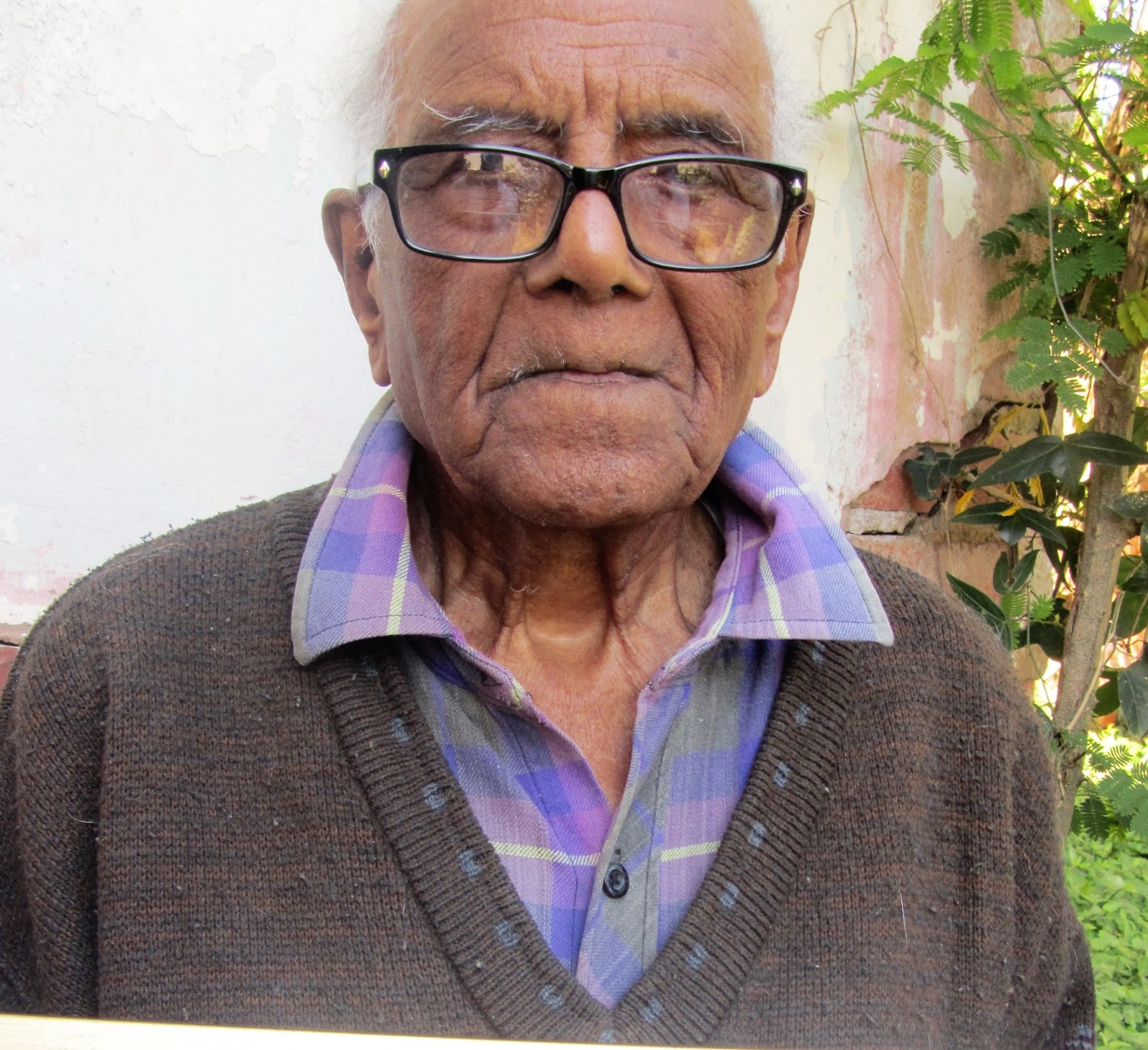
Sunday, September 24, 2017
FAMILY MEMBERS AND FRIENDS TURN UP IN THEIR NUMBERS FOR THE FUNERAL OF FAMILY ELDER – 95-YEAR-OLD ISAAC GOVENDER
By Subry Govender
Family members and friends of the late Ruthinsamy Munsamy Isaac Govender descended from far and wide on the city of Pietermaritzburg in South Africa on Saturday, September 23 (2017) to pay their last respects to their beloved elder.
The funeral service of Mr Govender, who passed away at the age of 95 at his home in Northdale, Pietermaritzburg on Saturday, September 16 (2017), was held at the local Bethlehem Baptist Church in Northdale.
In addition to his own children, grand-children, great-grand-children and members of his Christian fraternity, Mr Govender’s two surviving sisters, a sister-in-law, and scores of nephews and nieces and their families also attended the service.
His sisters, Mrs Savundalay Padaychee (90) of Dundee and Mrs Amoy Moodley (81) of Unit 3 Chatsworth, and sister-in-law, Mrs Soundler Govender, also of Chatsworth, were brought to the funeral of their brother and brother-in-law respectively by their children.
Members of all of Uncle Isaac’s 10 brothers and sisters who are resident all over Durban, Johannesburg, Dundee and other areas in the country represented their respective families. They included family members of Patcha Govender of Chatsworth; Nadasen Govender of Port Shepstone, Licky Govender of Chatsworth; Valiatham Dick Govender of Isipingo; Soobramoney Sooboo Govender of Isipingo; Percy Govender of Chatsworth; Salatchie Subramoney of Ottawa/Verulam; Savundalay Padaychee of Dundee; and Amoy Moodley of Unit 3 Chatsworth.
Tributes were paid to Uncle Isaac by members of his Christian church, two grand-children, Mrs Andrea Chetty, who is the daughter of Meryl Nagaroo; and Mrs Michelle Munsami, who is the daughter of Uncle Isaac’s youngest daughter, Dayanithie.
Uncle Isaac’s only son, Able Devadasen, who lives in Lenasia, Johannesburg, read out the obituary and one of Able’s sons, Jeremiah, who also lives in Johannesburg along with three of his brothers - David, Obiah and Joel and their respective families - passed the vote of thanks.
A woman member of church also sang a beautiful song in Tamil to honour Uncle Isaac’s love for his Tamil culture and traditions.
The writer also delivered a tribute on behalf of the extended Muniamma and Coopoosamy family. This was the speech:
A PROUD SECOND GENERATION DESCENDANT OF INDENTURED SUGAR CANE LABOURERS
“I shall pass through this world but once; any good thing therefore I can do, or any kindness that I can show to any human being, let me do it now. Let me not deter it, or neglect it, for I shall not pass this way again.”
This message by one of the greatest world humanitarians and leaders, Mahatma Gandhi, best describes the person we have come here to say our final farewell to.
Master of ceremonies and family members thank you very much for giving me a few minutes to say farewell to our beloved and respected ELDER on behalf of our extended family.
Vanakkam, Namaskaram, Namasthe, Sanibonani and Good afternoon.
We have assembled here to pay our last respects to an elder, who we as members of his extended and greater Muniamma Coopoosamy Govender Family, refer to as our Mamha, uncle, anna or elder brother, father, grand-father and great-grand-father.
Our Mamha or Uncle, Mr Ruthinsamy Munsamy “Isaac” Govender, better known as Isaac Mamha or Isaac Uncle, has had a very interesting journey during the course of his long life --- lasting 95 years until he passed on, on Saturday, Sept 16 (2017).
He was born on the 23rd of August in 1922 to Muniamma and Coopoosamy Govender at Dayal Road in the former “Indian” village of Clairwood, south of Durban.
His maternal grand-parents came from a little village called Navalpore in the North Arcott District of Tamil Nadu in South India in the early 1880s to work as indentured labourers at the Blackburn Sugar Estate near Mount Edgecombe on the North Coast. His mother, Muniamma, and his mother’s younger sister, Yellamma, were born in the late 1880s at the Blackburn Sugar Estate.
His paternal grand-parents also came as indentured labourers from the North Arcott District of Tamil Nadu.
Isaac Mamha/Uncle was part of a large family of 14 children, eleven of whom had survived to give birth to the greater and extended Muniamma family. His siblings were: eldest sister, Baigium or Periamma, eldest brother, Nadasen Govender ( or Port Shepstone uncle), Licky Govender of Unit 7 Chatsworth, Soobramoney Govender of Isipingo, Valiatham Dick Govender of Isipingo, Salatchie Subramoney of Ottawa/Verulam, Savundalay Padaychee of Dundee, Patcha Govender of Unit 3 Chatsworth, Percy Boya Govender of Merebank/Chatsworth, and Amoy Moodley of Unit 3 Chatsworth.
Only two of his sisters, Mrs Savundalay Padaychee, of Dundee who turned 90 on July 8, Mrs Amoy Moodley, who is 81-years-old and one sister-in-law, Mrs Soundler Govender (Percy uncle’s wife), who is in her 80s, are still around today.
Uncle Isaac, who lived in Northdale, Pietermaritzburg, in his early days at Dayal Road in Clairwood he helped his father, brothers and sisters in cultivating their market garden. They cultivated a number of vegetables, including strawberries, which they used to sell at the historic early morning market in Warwick Avenue in Durban.
After a few years at primary school, Isaac Mamha did odd jobs before taking up catering and being a top class chef at several hotels in Durban as his main occupation.
While still a young boy, Uncle Isaac, who used to attend Tamil classes and visit the local temples on a regular basis, also became interested in the Christian religion. He and his siblings only communicated through the medium of the Tamil language when growing up in Dayal Road.
He adopted the Christian faith at the young age of 17.
Isaac Mamha did experience some problems at home because of his action and had to leave home for nearly three years.
When he returned home, his eldest sister, Baigium, made arrangements for him one day to visit the home of a family friend in Merebank to pray for a person who was apparently sick.
Here he met his future wife, Aunty Kurpa Grace. One of his sisters, Aunty Savundalay, who is still around today, aged 90, was the brides-maid.
Isaac Mamha tied the holy “Thali” string because of his own traditional and cultural background and because Aunty Kurpa’s family were strong Catholic people who respected their family’s traditions and cultures.
After their wedding, Isaac Mamha and Aunty Kurpa stayed at Aunty Kurpa’s parents’ home for a while. Two of his children – Ruth and Able – were born here.
Isaac Mamha at this time was working at one of the hotels in Durban and he arranged for his brothers, Dick and Percy, to also work with him as page boys and waiters.
Then in the early 1960s, Isaac Mamha moved to Pietermaritzburg where he found a job at one of the top hotels. Here another three daughters – Selvie, Meryl and Dhaya were born.
After living in the central district of Pietermaritzburg for some time, Isaac Mamha and his family moved to Northdale after they were also affected by the notorious Group Areas Act, which was enforced by the former apartheid regime to separate the residential areas according to race – that is into white, coloured, Indian and African group areas.
Isaac Mamha had lived at this house with Aunty Grace, who passed on nearly eight years ago, and the rest of his family for more than 50 years.
Although he has been involved in the Christian religion for some time, Isaac Mamha has never forgotten his Tamil background, cultures and traditions. He managed to obtain a Tamil Bible and up to the time of his death he continued to sing religious songs in the Tamil language. On several occasions when we visited him here in Pietermaritzburg, he always made a point of singing religious songs in the Tamil language for us. I have recorded some of these songs and would gladly share them at another occasion.
He was also a Patron and active member of our extended Muniamma Family society and attended most of our gatherings that we used to hold in Durban and on the South Coast. At these functions he always offered his prayers in the Tamil Language.
He was also a regular at extended family weddings and other functions.
We want to tell Isaac Mamha that he has been a great human being and wherever he is today, we in the Greater Muniamma Family, will miss him a great deal. We are certain that those family members who had gone before him would have received him with warmth, love and kindness.
We want Isaac Mamha to know that he led a beautiful life – full of kindness, love, and respect for all.
His rich life – which includes a great deal more of his early life - makes up part of our Muniammma Family History book that we are publishing and will be launching soon. We will miss Isaac Mamha at the launch.
Isaac Mamha you lived your life according to what once a great Indian philosopher said:
“Nobody and nothing will follow you after death. Only your deeds – good or bad - will follow you when you leave this world for the next.”
Isaac Mamha, according to our extended Muniamma Coopoosamy Family, you have only led and demonstrated good deeds to all people, all your life. You have been a role model for all of us and we want to say that you have now left a big void in our extended family.
When you meet Aunty Kurpa and the rest of the family members, please tell them that we miss all of them dearly and they must take care of all their descendants down here in South Africa, Australia, New Zealand, England, Germany and the United States.
Ladies and gentlemen, that’s my message on behalf of the greater Muniamma and Coopoosamy Govender family. Thank you very much and once again our deepest condolences to Ruth, Able, Selvie, Meryl, Daya, grand-children and the great-grand-childen.
A big thank you to his grand-son, Roland, and his wife, Desire, for taking care of Isaac Mamha in the last days of his life. Ends – subrygovender@gmail.com
Tuesday, September 19, 2017
SECOND GENERATION DESCENDANT OF INDENTURED LABOURERS WHO WAS ATTACKED BY HIS FATHER FOR TURNING TO CHRISTIANITY IN THE MID-1930s AT THE AGE OF 17 PASSES ON AFTER ATTAINING THE RIPE-OLD AGE OF 95
By Subry Govender
(RUTHINSAMY MUNSAMY ISAAC GOVENDER WITH HIS WIFE, KURPA, AT THEIR HOME IN NORTHDALE, PIETERMARITZBURG, IN SOUTH AFRICA)
A second generation descendant of indentured labourers who had to flee his home at the age of 17 after being attacked by his father for “praying to a white man’s God”, has passed on at the age of 95 at his home in Bombay Road in Northdale, Pietermaritzburg, in South Africa.
Mr Ruthinsamy Munsamy Isaac Govender, who grew up in Dayal Road in the historic “Indian” village of Clairwood, in the city of Durban, passed on, on Saturday, September 16, only three weeks after attaining the ripe-old age of 95.
Mr Govender, who was also known as Wally to his “Christian” colleagues, was born on August 23 2017. He recalled his early life growing up in Dayal Road in several interviews with this correspondent over the past few years.
(MR GOVENDER WITH HIS DAUGHTERS, MERYL AND DAYA, NIECE, THYNA, AND SOME OF HIS GREAT-GRAND-CHILDREN AT HIS HOME IN PIETERMARITZBURG ON HIS 95TH BIRTHDAY ON AUGUST 23 2017)
(MR GOVENDER WITH HIS WIFE, KURPA, AND CHILDREN - RUTH, ABLE, SELVIE, MERYL AND DAYA)
He was interviewed for a book that was being written about his indentured family’s history.
He was born to Muniamma and Coopoosamy Govender, who were market gardeners at Dayal Road until they were affected by the development of the Durban Port in the early 1950s.
His mother and his mother’s younger sister, Yellamma, were born at the Blackburn Sugar Estate, near Mount Edgecombe, on the North Coast of the KwaZulu-Natal province in South Africa.
(MR GOVENDER WITH HIS SISTERS, SALATCHIE AND SAVUNDALAY, AND OTHER FAMILY MEMBERS AT A MUNIAMMA GATHERING)
His grand-parents, Kandasamy and Thanji, came as indentured labourers from the village of Navalpore in the then North Arcott District of Tamil Nadu in South India in the early 1880s. They worked as indentured labourers on the sugar estate for 10 years.
Mr Govender was part of a large family of 14 children but today only he and two sisters are still around. His sisters, Savundalay Padaychee, who lives in Dundee, turned 90 on July 8, and Amoy Moodley, who resides in Chatsworth, celebrated her 82nd birthday on August 10. He also has one surviving sister-in-law, Soundler Govender, who is in her 80s and lives in Chatsworth.
Mr Govender has come a long way from his early days at Dayal Road in Clairwood where in his youth he helped his father, brothers and sisters in cultivating their market garden.
After a few years at primary school, he did odd jobs before taking up catering at several hotels in Durban as his main occupation.
While still a young boy, he used to attend Tamil classes and visit the local temples on a regular basis.
But when he became interested in the Christian religion at the tender age of 17, he faced attacks and rejection from his father and one of his elder brothers. They accused him of transgressing the family’s belief system.
(MR GOVENDER WITH FAMILY MEMBERS AT A FAMILY FUNCTION IN DURBAN, SOUTH AFRICA)
On one occasion, after visiting a local shop in Clairwood, he purchased a photo of Jesus Christ for two pence (this was the currency at that time until the late 1960s). When he took the photo back home, he was confronted by one of his brothers who asked him this question:
“Why do you bring a white man’s God to our home?”.
But he said he was not intimidated by his brother’s disapproval and instead retorted as follows:
“Listen here Anna (big brother) I have paid for this photo and it belongs to me. It has nothing to do with you. You are not going to tell me what to do.”
Then on another occasion, after secretly converting to Christianity at the age of 17, his father found him praying on the side of his bed.
His father was furious and grabbed a spear and started to run after him.
His mother, Muniamma, tried to stop Coopoosamy Govender but he pushed her aside and shouted:
“It’s because of you he is acting like this.”
He said his father shouted: “He is praying to a God we don’t approve of.”
Noticing the serious trouble he had found himself in, young Govender jumped through the window and ran to a neighbour’s home for safety.
He stayed the night at the nieghbour’s home and the next morning escaped to Durban. He went to the home of a pastor in Beatrice Street where he stayed for a few years while working as a chef.
His mother, brothers and sisters were not too happy about him leaving home and spoke to Coopoosamy Govender to change his mind about young Govender.
(MR GOVENDER WITH HIS ELDER BROTHER, NADASEN, AT ONE OF HIS BROTHER, LICKY GOVENDER'S HOME IN CHATSWORTH, SOUTH AFRICA)
(MR GOVENDER WITH HIS YOUNGEST BROTHER, PERCY GOVENDER)
While he was working at the Athlone Hotel at Riverside in Durban, he got a surprise visit from his father one day. His father wanted to talk to him about returning home in Dayal Road.
“You have been away for three years and it’s not nice that you are staying away. I want to you to come back,” he said his father told him.
Young Govender agreed to return home to Dayal Road on condition that he did not interfere with his religious affiliation.
But when he returned home, he got a shock.
“My father made a special room for me in the verandah where a separate plate and cup were provided for me. My father told me that I must eat on my own and that during weddings and other functions, I must not get involved.
“But of course this only applied when my father was not around. My mother and other brothers and sisters were very concerned about me and made sure that I was not treated separately.”
However, young Govender suffered more frustrations and inconveniences when his elder sister arranged for him to meet a young girl in the Merebank area. That girl, Kurpa, turned out to be his future wife.
Although his father did not oppose his marriage, he insisted that he would not attend. At the same time he warned his wife and his children not to attend the wedding.
(MR GOVENDER WITH HIS WIFE, KURPA, AND ONE OF HIS SISTERS, SALATCHIE GOVENDER)
But some of the brothers and sisters informed the old man that they were going to watch a Tamil movie at the Rani Theatre.
“I was 22 at this time and my father was totally opposed to me marrying a Christian girl. He never accepted the fact that I became a Christian.
“So when I got married he never turned up and he made certain that my mother also did not attend. But four of my sisters and two brothers were there. They bluffed my father that they were going to Rani cinema for a show. My sister, Savundalay, was my bride’s maid.
“One of my elder brothers did not want to have anything to do with me because I became a Christian.
“I tied the ‘thali’ because my wife’s family were strong Catholic people who respected their family’s traditions and cultures. The ‘thali’ my wife converted to rings later in our married life.
(MR GOVENDER WITH SOME OF HIS BROTHERS AND SISTERS)
“My father mellowed his attitude a little only after my eldest daughter and son were born.”
Mr Govender and his young family moved to Pietermaritzburg in the late 1950s after he found a job as a chef at one of the top hotels.
They lived in the “Indian” district of central Pietermaritzburg for some time and moved to his present home in Northdale after being affected by the notorious Group Areas Act, which was enforced by the former apartheid regime to separate the residential areas according to race – white, coloured, Indian and African.
(MR GOVENDER WITH HIS DAUGHTER, RUTH, AND WIFE, KURPA, AT ONE OF THE MUNIAMMA FAMILY GATHERINGS)
(MR GOVENDER WITH HIS WIFE, KURPA, AND SOME OF HIS IMMEDIATE FAMILY MEMBERS)
(MR GOVENDER WITH FAMILY MEMBERS AT ONE OF THE MUNIAMMA FAMILY GATHERINGS)
He and his family have been living at this house for more than 50 years.
Although he has been involved in the Christian religion for some time, Mr Govender has never forgotten his Tamil background, cultures and traditions. He managed to obtain a Tamil Bible and continues to sing religious songs in the Tamil language.
(MR GOVENDER WITH ONE HIS SISTERS, PATCHA, AND ONE OF HIS BROTHERS, PERCY, AT A FAMILY GATHERING)
He also kept in close touch with his extended family by attending most of the weddings and other functions. He was a patron and senior of the Muniamma Family Social Club, which was established to keep alive the close bond of the extended family. He attended the family gatherings and getaway and at these occasions he always addressed his family members in the Tamil language and sang religious songs in Tamil. Ends – subrygovender@gmail.com
Wednesday, September 13, 2017
MANGLEN PILLAY – A SOUTH AFRICAN FIRST GENERATION DESCENDANT OF INDENTURED LABOURERS WHO HAS ACHIEVED THE RIPE OLD AGE OF 100
MANGLEN PILLAY - WHO SET ASIDE HIS ENTIRE LIFE TO THE PROMOTION OF THE TAMIL CULTURE, LANGUAGE AND TRADITIONS.
(MR MANGLEN CHETTY WITH THE AWARD GIVEN TO HIM BY THE CKAIRWOOD TAMIL INSTITUTE)
By Subry Govender
(Manglen Pillay with his surviving brother, Dennis Pillay, and sisters, Dulcie and Mammy)
A first generation descendant of early Indian immigrants, who grew up committed to the promotion of the rich language, music, culture and traditions of his forefathers and mothers and who has been a strict vegetarian all his life, will reach the golden age of 100 on September 18.
Mr Manglen Pillay was born in Grangetown, Verulam on the KwaZulu-Natal North Coast along with an elder brother to his parents, Subramaniam and Meenachie Pillay. When he was two-years-old his parents moved to an area at the corner of Essendene and East Streets in Durban before settling in the then historical “Indian” district of Clairwood.
The rest of his siblings, five brothers and five sisters, were born in Clairwood. All of them were brought up as strict vegetarians and musicians, committed to the Tamil language, culture and traditions.
(Manglen Pillay with members of his band From (l to r) A Govindsamy, S V Freddy Naicker, C N Naidoo, M. Subramani, Manglen Pillay , K Govindsamy.)
“I am still a vegetarian and I continue to play the Sithar, Harmonium and Violin at functions in a nearby temple,” Mr Pillay told me in a recent interview at his humble home in Overport, Durban, where he has been living for the past 70 years.
Although he has reached the ripe-old age of 100, Mr Pillay, a bachelor all his life, is still healthy, strong and has clear memories of his roots, his early life growing up in Clairwood, his involvement in music and sport, his work as an architect and artist, and his association with his struggle activist cousin, Kay Moonsamy, who passed on recently at the age of 91 on June 21.
Mr Pillay’s father came to the then Natal Colony in 1898 at the age of 12 with his father and mother and another brother from the village of Orathur in the district of Kancheepuram and Changalpattu in Tamil Nadu in South India.
“I was told that another four brothers and one sister of my father were born here after he, his brother and mother and father came down on the ship, Congella, in the late 1890s.
“After my father worked in odd jobs, he specialised as a chef and worked in many establishments before joining the Marine Hotel in Durban. After my father married in the early 1900s, he settled down in Grangetown in Verulam. But when I was two-years-old my parents moved to an area in Durban before settling in Clairwood.
“Although my father worked as a chef he did not earn enough to feed and educate such a huge family of 12 children. We were very poor and had to make do with whatever our parents provided us. But I was fortunate that I attended school in Clairwood and completed my education as a draughtsman and architecture at the Sultan College in Durban.”
He taught as a locum teacher in Clairwood for a short while before joining an architectural company, known as Raman and Company, in Durban as a plan drawer in 1933. He worked here for 10 years before starting his own company in 1946 with offices in Hoosen’s Building and later moved to Rajab Building in the former “Grey Street” complex.
“I can recall that I drew plans for the Vijay and Rani theatres and also for houses in Asherville, Merebank, Mobeni Heights and other areas in Durban.”
(Manglen Pillay playing the harmonium with band members, Ratty (thubla), Maggie (vocalist) and Nanda (violin))
At the same time while working as an architect and artist, Mr Pillay also concentrated much of his time in promoting Tamil music and culture.
“I started playing the Sithar from the age of 12 because my father, who was also a musician, encouraged all his children to take a keen interest in music. Later in life I also started to play the violin and the harmonium.
“In 1935 I launched the Odeon Band with Shunmugam Peters, who I met while training as a wrestler and boxer. I remained in this band for 10 years and thereafter in the late 1940s I became a founder-member of the Thirukural Society of South Africa, which we established in my office in Rajab Building.
“Up to this day I still participate in functions. I played the harmonium during Sivarathrie for eight hours last year and in June this year I played at the Ramdass Temple again here in Overport.”
(Manglen Pillay (third from left adults) with students and fellow teachers at the Lingham Tamil School in Wentworth.)
Although not politically-involved, he did, however, make available his office in Durban to be used as a half-way house for the storage of political literature and books that were scheduled for organisations such as the Natal Indian Congress and the South African Communist Party.
“This arrangement for me to make available my office was made by my cousin, Kay Moonsamy, just before he left the country and went into exile. I would pass on the books to Mr G S Naidoo, who was an attorney, and Mr George Naicker, who was a political activist at that time. They would then pass on the books and political literature to Dr Monty Naicker and the other people.
(Manglen Pillay with his late cousin, struggle veteran Kay Moonsamy, and Mr Moonsamy's daughter, Ragini.)
“But sooner or later the security police came to know about the goings-on and my office was raided by them on several occasions,” he said.
The recipe for his long life?
“I believe being a vegetarian, being involved in sport, hard work and playing the sithar, violin and harmonium has contributed to my long life. I also did not meet the right woman. I don’t know how long I am going to live but I want to say that my philosophy has always been: ‘be good and do good’.”
Despite his strong attachment to the Tamil culture, language, music and tradition, Mr Pillay has not made any trips to visit India or his roots in Orathur village in Tamil Nadu.
“I don’t know why I did not think about visiting the land of my parents but I did send my nephew on two occasions to India. I think I am now not at an age where I can travel freely.”
(Manglen Pillay - a drawing by artist M R Pillay of Manglen Pillay working in his office in Hoosen's Building, Queen Street, Durban in 1950.)
Mr Pillay is very saddened at the high rate of violent crime that people have to put up with in his neighbourhood and other areas in and around Durban.
“I stay with my nephew and you know we cannot leave our house or we cannot leave anything outside our home. There are criminals all over and the attacks on homes is very high.
“In our early days we could go everywhere and there was no problem. Life was really a pleasure in our days but now we live like hostages in our own homes. We have to lock up and live like prisoners. We have been living here for 70 years but now we are thinking of selling this place and moving out,” he said with sadness written on his face.
Mr Pillay is one of four members of his large family of 12 siblings still around today. He has one brother, Dennis Pillay, who is 92-years-old and lives with his family in Silverglen, Chatsworth; and two sisters, Mammy, 80, and Dulcie, 78, who still live in Clairwood.
The extended family have organised a birthday celebration for Mr Pillay at the NPS Hall in Asherville, Durban, on October 1. Ends – subrygovender@gmail.com Sept 6 2017
Wednesday, August 30, 2017
FATIMA MEER - A STRUGGLE STALWART WHO ESPOUSED TRUE VALUES AND PRINCIPLES OF NON-RACIALISM AND DEMOCRACY
(PHOTOS SUPPLIED BY SHAMIM MEER - DAUGHTER OF FATIMA MEER)
In this feature in our series on Struggle Heroes and Heroines, veteran journalist writes about Professor Fatima Meer, a sociologist, writer, academic and anti-apartheid activist, who passed on in March 2010 at the age of 82. She would have turned 89 last week Saturday on August 12. Early this year in March an autobiography of Professor Meer’s life was published by her family. This special feature concentrates on an interview that Subry Govender conducted with Professor Meer in August 2008 when she was celebrating her 80th birthday.
“I lived in a South Africa which was full of challenges and I am grateful today that I more or less rose to the challenges. The challenges were our opportunities and we either grabbed those opportunities and ran with them or we were apathetic, turned our backs on them and lost out on what had been given to us,” Professor Fatima Meer was speaking in an interview with this correspondent at her home in Durban about her life and struggles against apartheid and white minority rule on her 80th birthday in August 2008.
She was one of the most prominent anti-apartheid activists who made an indelible contribution in the struggles prior to 1994. I had come to know Professor Meer very closely since the early 1970s when I worked for the Daily News at that time situated at 85 Field Street in central Durban. Professor Meer was attached to the then University of Natal (now University of KwaZulu-Natal) and was involved in a number of social and womens’ organisations.
(Fatima Meer with her husband, Ismail Meer, M N Pather, George Singh, Monty Naicker)
I would telephone Professor Meer on a regular basis about the work she was doing in promoting – among other things - social inter-action, upliftment of education among the marginalised and poor, and, her total rejection of those who worked with the apartheid regime in institutions such as the South African Indian Council (SAIC), the House of Delegates (HOD) and the bantustans.
She has been involved in the struggles almost all her life despite the harassment by the former security police, bannings and house-arrests, detentions, denial of a passport to travel overseas, and
an assassination attempt on her life while she was restricted at her home in Durban.
Her social and political awareness became enmeshed in her while growing up in a Durban home where her father, a newspaper editor, constantly spoke to his large family of nine children about the racial inequalities that persisted in South Africa at that time.
Her active involvement against the apartheid system started to surge forward during her student days at the University of Natal and when she became involved in the 1946 Passive Resistance campaigns. She initiated the Student Passive Resistance Committee.
With her husband, Ismail Meer, also a socialist and anti-apartheid activist, she worked very closely with Nelson Mandela, Dr Albert Luthuli, Dr Yusuf Dadoo, Dr Monty Naicker, Ahmed Kathrada and Dr Kesavaal Goonum before the ANC was banned in 1960.
(FATIMA MEER ADDRESSING A UDF RALLY IN DURBAN)
Thereafter, she worked with leaders such as Winnie Mandela and Steve Biko, and other leaders in the black consciousness movement. She was also part of the leaders who established the Federation of Black Women.
For most of the 1980s and 1990s she concentrated her social and political work in the Institute of Black Research, which was based at the University of Natal.
Even after the ANC came to power in 1994, Professor Meer with other community leaders, established the Committee of Concern to highlight the plight of the poor.
At the time of her 80th birthday in 2008, there was disquiet among former anti-apartheid activists about all the reports of fraud and corruption; the growing gap between the rich and poor and the infighting within the ANC.
It was against this background that I spoke to Professor Meer about her struggles and what she had hoped for the new non-racial and democratic South Africa.
She was concerned at that time in August 2008 that the values and principles that she and tens of thousands of others had fought and died for had not been realised in the new South Africa.
(FATIMA MEER WITH NELSON MANDELA AFTER HIS RELEASE FROM PRISON IN FEBRUARY 1990)
“Although we applaud our constitution all the time and walk around thinking that we have the best constitution in the world, the truth of the matter is that democracy has evaded the people,” she had said.
“Democracy has been captured and confined to the political parties and that is our problem.
“It is very sad that when you think of the ANC as a liberatory organisation and what it has become as a government. Most of the promises of liberation have not been materialised. That is our greatest tragedy.”
She had added: “In general the governing body has not established equality. Poverty is rampant among our people, so we have to reform in true sense of the word to re-establish, reform, renew, and govern with the same values that you fought with.
“This corruption must end, the money must go back to the people, the land must be re-distributed among the people and we must develop our agricultural resources.
“Prior to colonialism we had a very strong and vibrant African peasantry. Colonisation destroyed that. It is our duty to resurrect that peasantry so that it becomes one way of dealing with poverty. If our people can't work the land and raise food from the land, there's going to be movement from the rural to the urban areas.
“Crime has to come to an end. So there's an enormous amount of work to be done. We can do it. India used to have its five-year plans under Jawaharlall Nehru and they worked. Today India is a great booming economy and we could also become like India.
“We have to have another government. Now I am quite convinced that the ANC will suffer an erosion in support in forthcoming elections. The electorate will be significantly weaker in numbers and that will reflect in the withdrawal of support of the people.
“People know exactly what is wrong and they are going to put it right and that is my hope and that is our hope.”
(FATIMA MEER WITH ADVOCATE ISMAIL MAHOMED, NORMAN MAILER AND BOBBY MARIE)
Meer also spoke about the lack of leadership among people of Indian-origin, saying she was concerned that the ANC needed to change its strategies in order to garner the support of a people who once worked very closely with the ANC and with organisations such as the United Democratic Front in the 1980s and early 1990s.
This was her view: “You see the Indians had a very strong organisation in the Natal Indian Congress and I wrote to Mr Mbeki long, long ago that it had been a tragedy that the ANC had asked the NIC to be disbanded. It was a tragedy because it was an organisation founded by Mahtma Gandhi in the last century. It was an organisation that stood by the ANC always.
“Now the ANC had made the biggest mistake, I had pointed out to Mr Mbeki, by saying to the Indians you don't need an Indian organisation, you can belong to the ANC.
“Politically, as a political party the ANC was fine and totally acceptable but to organise the Indian people, the Indian people needed an organisation.”
Professor Meer was of the view that the ANC had committed a major mistake and a dis-service to the people by forcing the disbanding of the NIC and thereafter getting into bed with the leaders of the former tri-cameral institutions.
“I consider that to be disgraceful and disloyalty to former patriots and to former partners in the revolution. The ANC deluded itself into thinking that these people represented the Indian people and that it would have the Indian vote and the Indian support through these elements. That was a mistake made by no less a person than Nelson Mandela and then it was continued thereafter. That is what I pointed out to Mbeki many years ago soon after he took over the leadership.”
What was her answer for strengthening the support base of the ANC within people of Indian-origin?
“I would prefer we resurrect our roots, our history and we revive the Indian Congress. The ANC must recognise the support the Indian Congress gave in the time of revolution and that today to, in the time of government, this support should continue.
“It should deal with progressive forces who have principles and programmes that are akin to the ANC, instead of going around piece meal, picking up people who have money.”
(A PAINTING DRAWN BY FATIMA MEER WHEN SHE WAS IMPRISONED AT MODDERBEE PRISON IN JOHANNESBURG IN 1976)
Although Professor Meer’s call at that time for the revival of the Natal Indian Congress and the South African Indian Congress was discussed in certain progressive quarters, her suggestion was dismissed by other elements.
However, a number of former anti-apartheid leaders have discussed alternative strategies to garner the support of the people for the ANC, instead of the people moving to other reactionary political movements.
Professor Meer, who passed on nearly two years after the interview on March 12 2010, was a leader who was not afraid to speak her mind on socio-economic and political issues affecting the people.
This was also reflected in the nearly 60 publications and books that she edited and authored during her life. Some of these included Protrait of Indian South Africans, Apprenticeship of a Mahatma, Documents of Indentured Labour, Passive Resistance and Higher Than Hope, the first authorised biography of Nelson Mandela.
One of the publications she edited and published in 1989 was the 1985 Treason Trial that the former apartheid regime instituted against 16 top political leaders of the Natal Indian Congress and the United Democratic Front at the height of the struggles in the mid-1980s. Professor Meer with the assistance of a number of researchers chronicled the lives of the leaders – Mewa Ramgobin, George Sewpersadh, M J Naidoo, Essop Jassat, Aubrey Mokoena, Curtis Nkondo, Archie Gumede, Devadas Paul David, Mrs Albertina Sisulu, Frank Chicane, Ebrahim Salojee, Thozamile Gqweta, Sam Kikine, Isaac Ngcobo, and Ismail Mahomed, who was the defence lawyer in the case.
Despite her disillusionment at that time during the 15th year of our freedom, Professor Meer was still hopeful and confident about the future. She had said:
“I am hopeful because I think our people are aware of this and they will, just as our people won liberation for the country and established democracy, in the same way resurrect all the promises made to ourselves.
“So my hope is in the people's capacity and strength and the fact that the people hold values that the leaders may have somehow foresaken and forgotten.”
Professor Meer’s sentiments are becoming a reality when many leaders within the ruling ANC, former veterans and stalwarts, non-government organisations, religious organisations and civil society groups have come out bravely and openly to speak out against all the allegations of fraud and corruption, inefficiency in government services at national, provincial and local levels and the general falling standards in our educational and health systems that plague her beloved South Africa today, 23 years into our free and “non-racial” democracy. – ends subrygovender@gmail.com
Wednesday, August 23, 2017
BY SUBRY GOVENDER HAPPY 95TH BIRTHDAY - Ruthinsamy Munsamy “Isaac” Govender
(ISAAC MAMHA ADDRESSING HIS MOTHER'S 100th BIRTHDAY IN CANELANDS, VERULAM)
Today, the 23rd August 2017, we, members of the greater Muniamma Family, want to wish our Mamha, uncle, elder brother, father, grand-father and great-grand-father, Mr Ruthinsamy Munsamy “Isaac” Govender, better known as Isaac Mamha or Isaac Uncle, a happy and joyous 95th birthday.
Isaac Mamha was born on this day in 1922 to Muniamma and Coopoosamy Govender at Dayal Road in the former “Indian” village of Clairwood, south of Durban.
(ISAAC MAMHA AND HIS WIFE, KURPA)
He was part of a large family of 14 children, eleven of whom had survived to give birth to the greater and extended Muniamma family. His siblings were Baigium (Periamma), Nadasen Govender (Port Shepstone uncle), Licky Govender of Unit 7 Chatsworth, Soobramoney Govender of Isipingo, Valiatham Dick Govender of Isipingo, Salatchie Subramoney of Ottawa/Verulam, Savundalay Padaychee of Dundee, Patcha Govender of Unit 3 Chatsworth, Percy Boya Govender of Merebank/Chatsworth, and Amoy Moodley of Unit 3 Chatsworth.
Isaac Uncle, Savundalai aunty and Amoy aunty and their deceased brothers and sisters are second generation descendants of our ancestors, Kandasami Naiken and his “wife”, Thanji, who came to the former Natal Colony as indentured labourers in the year 1882.
At the time of his 95th birthday, only two of his sisters are still around, Mrs Savundalay Padaychee, of Dundee who turned 90 on July 8, and Mrs Amoy Moodley, who is 81-years-old. One sister-in-law, Mrs Soundler Govender (Percy uncle’s wife), who is in her 80s, is also around today.
(ISAAC MAMHA WITH HIS BROTHER, PERCY, AND SISTERS AT A FUNCTION OF THE MUNIAMMA FAMILY SOCIAL CLUB)
Uncle Isaac, who lives in Northdale, Pietermaritzburg, has come a long way from his early days at Dayal Road in Clairwood where in his youth he helped his father, brothers and sisters in cultivating their market garden. They cultivated a number of vegetables, including strawberries, which they used to sell at the historic early morning market in Warwick Avenue.
After a few years at primary school, Uncle Isaac did odd jobs before taking up catering at several hotels in Durban as his main work.
While still a young boy, Uncle Isaac, who used to attend Tamil classes and visit the local temples on a regular basis, also became interested in the Christian religion. But his interest in Christianity caused him unwanted problems with his family, especially his father and one of his brothers, who accused him of transgressing the family’s belief system.
On one occasion, after visiting a local shop in Clairwood, he purchased a photo of Jesus Christ for two pence (this was the currency at that time until the late 1960s). When he took the photo back home, he was confronted by one of his brothers who asked him this question:
“Why do you bring a white man’s God to our home?”.
But Isaac Mamha told me that he was not disturbed by this question and instead retorted as follows:
“Listen here Anna (big brother) I have paid for this photo and it belongs to me. It has nothing to do with you. You are not going to tell me what to do.”
(ISAAC MAMHA WITH HIS TWO SURVIVING SISTERS, AMOY AND SAVUNDALAI, AT A FAMILY FUNCTION AT THE JAPANESE GARDENS IN DURBAN IN JANUARY 2016)
Then on another occasion, after secretly converting to Christianity at the age of 17, Isaac Mamha was found by his father to be praying on the side of his bed.
His father was furious and grabbed a spear and started to run after him.
His mother, Muniamma, tried to stop the old man but Coopoosamy pushed her aside and scolded: “It’s because of you he is acting like this.”
He shouted : “He is praying to a pariah God.”
Noticing the seriousness of the situation he had found himself in, Isaac Mamha jumped through the window and ran to a nieghbour’s home for safety.
He stayed the night at the nieghbour’s home and the next day left home. He went to the home of a pastor in Beatrice Street in the then Grey Street area of Durban where he stayed for a few years while working as a chef.
His mother, brothers and sisters were not too happy about him leaving home and spoke to the old man to change his mind about Isaac Mamha.
While he was working at a hotel at Riverside in Durban, he got a surprise when his father pitched up and said he wanted to talk to him.
“You have been away for three years and it’s not nice that you are staying away. I want to you to come back home,” his father told him.
Isaac Mamha agreed to return to Dayal Road on condition that his father did not interfere with his religious affiliation.
But when he returned home, he got a shock.
(ISAAC MAMHA AND HIS ELDER BROTHER, NADASEN GOVENDER, AT THE HOME OF ANOTHER BROTHER, LICKY, IN CHATSWORTH, DURBAN)
“My father made a special room for me in the verandah where a separate plate and cup were provided for me. My father told me that I must eat on my own and that during weddings and other functions, I must not get involved.
“But of course this only applied when my father was not around. My mother and other brothers and sisters were very concerned about me and made sure that I was not treated separately.”
However, Isaac Mamha suffered more frustrations and inconveniences when his elder sister arranged for him to meet a young girl in the Merebank area. That girl turned out to be his future wife, Aunty Kurpa.
Although his father did not oppose his marriage, he insisted that he would not attend the wedding. At the same time he warned Muniamma and the other children not to attend the wedding.
But some of the brothers and sisters informed the old man that they were going to attend a Tamil movie at the Rani Theatre. They attended the wedding and Dundee aunty was the bride’s maid.
Isaac Mamha tied the “Thali” because of his own background and because Aunty Kurpa’s family were strong Catholic people who respected their family’s traditions and cultures.
After their wedding, Isaac Mamha and Kurpa stayed at Kurpa’s parents home for a while.
(ISAAC MAMHA WITH HIS BROTHERS AND SISTERS AT A FUNCTION OF THE MUNIAMMA SOCIAL CLUB ON THE SOUTH COAST)
His father mellowed his attitude after Ruth and Able were born and they began visiting Dayal Road.
Isaac Mamha at this time was working at one of the hotels in Durban and he arranged for his brothers, Dick and Percy, to also work with him as page boys and waiters.
Then in the early 1960s, Isaac Mamha moved to Pietermaritzburg where he found a job at one of the top hotels. Here another three daughters – Selvie, Meryl and Dhaya were born.
(ISAAC MAMHA WITH ONE OF HIS GRAND-DAUGHTERS, MICHELLE MUNSAMI, AT A FAMILY FUNCTION IN DURBAN IN 2016)
After living in the “Indian” district of central Pietermaritzburg for some time, Isaac Mamha and his family moved to Northdale after they were also affected by the notorious Group Areas Act, which was enforced by the former apartheid regime to separate the residential areas according to race – white, coloured, Indian and African.
(ISAAC MAMHA WITH HIS LATE WIFE, AUNTY GRACE KURPA, and his late sister, Salatchie Subramoney)
Isaac Mamha has been living at this house with Aunty Grace and his family for more than 50 years.
Although he has been involved in the Christian religion for some time, Isaac Mamha has never forgotten his Tamil background, cultures and traditions. He managed to obtain a Tamil Bible and up to this day continues to sing religious songs in the Tamil language.
We want to wish him a very happy birthday and hope that he will still be around to see the golden age of 100 like his mother, Muniamma. Ends – subrygovender@gmail.com
Tuesday, August 15, 2017
30TH ANNIVERSARY OF THE PASSING SUBRAMONEY MUNIEN GOVENDER ON AUGUST 16 1987
Today, August 16 2017, is the 30th anniversary of the passing of our father, Mr Munien Subramoney Govender. At the time of his passing on August 16 1987, he was staying with his family at 30 Mimosa Road, Verulam. Prior to moving to Verulam in the late 1960s, our father and mother raised seven children and one adopted son at our home in Munn Road, Ottawa. Our father was born in Cato Manor where his parents, mother, Kaniamma, and father, Munien, set up home in the early 1920s. His father, Munien, came to the former Natal Colony as a young boy with his aunty from the village of Damal in the Kanchipuram district of Tamil Nadu.
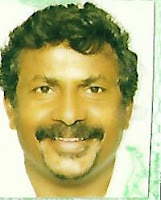
He was part of a large family of three brothers and six sisters. Only one sister, Meenachie, who lives in Phoenix, is still around today.
The pictures of our father published here were taken when we were living in Munn Road, Ottawa and Lotusville, Verulam. His parents and sisters, Manna, Chapane and Meenachie, photo was taken in Cato Manor.
On this day, August 16 2017, the 30th anniversary of his passing at the age of 69, we his children – Ambiga, Sadha(Subry), Nanda, Sydney, Kistamma (Violet), Nelson, and Natachthramma (Childie), grand-children, great-grand-children, and daughters-in-law want to express our sincere gratitude to him for working tirelessly with Amma to provide us the educational opportunities for us to better our lives.
He was one of the volunteers who sacrificed their time at weekends and holidays to build the Jhugroo primary school for the community of Ottawa. He worked with people of the calibre of SS Maharaj, Munoo Maharaj, Badloo, Mr Singh of School Road, Mr Naicker and others to promote the importance of education in our lives.
He and our mother, Salatchie, are always in our thoughts.
Subscribe to:
Posts (Atom)


data-original-height="899" />