Wednesday, February 28, 2024

DILLINGER GOVENDER FAMILY HISTORY OF MAHARAJ ROAD IN OTTAWA


DILLINGER GOVENDER FAMILY HISTORY OF MAHARAJ ROAD IN OTTAWA


"INDENTURED FATHER" - NARAYANAN GOVENDER - WAS FROM A LITTLE VILLAGE IN WHAT WAS THEN KNOWN AS THE MADRAS PRESIDENCY IN INDIA


 (Dillinger Govender, his wife and two sons)


By Subry Govender

 In the 1950s and 1960s while most of the people of our little village of Ottawa were still trying to stabilise their lives, one large family at the far end of Maharaj Road that caught our attention was the Dillinger Govender family.

Dillinger was the calling name of Soobramoney Govender, who was the eldest son of an indentured labourer, Narayanan Govender. Narayanan Govender toiled at the Mount Edgecombe Sugar Estate and the Ottawa Sugar Estate after he arrived in the late 1800s with some friends from Tamil Nadu in India.

Narayanan Govender settled in Ottawa in the early 1900s after he married a local woman, Nagamma,  despite having a wife and two children in the district of “Poluar Jilla” in Tamil Nadu. 


(Nagamma was the mother of Dilinger and his 10 brothers and sisters)

Here in Maharaj Road, Dillinger and his five other brothers and two sisters were born. The other family members who became well-known, like Dillinger, to the rest of the community were: 

Moonsamy John Govender; Doorsamy Bux Govender; Chinboy Chin Govender; Kisten Billy Govender; Soobiah Soobs Govender; Perumal Peru Govender; Amoy Govender and Ambi Govender.

(Chinboy Chin Govender - standing left. Another brother - Kisten Billy Govender - seated left - and Peru Govender.)


(Soobiah and Peru when they were students at Verulam High School in the 1960s)


I interacted with Logan Govender, the eldest son of Dillinger, about the Govender family and life in Ottawa in the early days. His uncle, Peru Govender, who is in his 80s and lives in Johannesburg, also provided the information in detail about the Govender family’s roots and life in Ottawa.


(PERU GOVENDER)

According to Peru Govender, who was an educator in schools in Verulam and surrounding areas, his father had accompanied some of his friends when they decided to come down to the former Natal Colony to “get rich quick” and then return home to Tamil Nadu.


“My father came as a ‘non literate’ person. Ploughing the earth and planting and grazing was all he knew. Many were filled with hopes as high as the stars. They transgressed the Indian Ocean making their way from India to Durban in the late 1800s. Yet reaching their dream of a better life and returning home triumphant was not to be.

 “It is unclear whether the kind of life they would come to live as indentured labourers was immediately apparent to them.


"FATHER BONDED TO A LEGACY OF HARDSHIP AND DOMINATION”

“They would be bonded to a legacy of hardship and domination.  “They were denied choices of work, wages, residences and conditions of living. Separation between husbands and wives and their families could last for decades. In my father’s case it was ‘for ever’.

“The severance of contact with my step-mother in India affected my father immensely. He became broody, quiet for long periods of time and very often tearful. Life in Natal was difficult. Socio-economic conditions made family life difficult. Home for many like my father was ‘no more’. He had everything to lose. A wife and two minor children.

“He got ‘stuck’ here, married my mother, Nagamma, had 11  children (including two children in Tamil Nadu), and died at 96-years-old. Life in Mt Edgcombe and Ottawa Estate was brutal and heart rendering, painful and compelling episodes of indenture.

“Most of the indentured workers could not even ‘read’ the dispositions they were asked to sign. They simply used the ‘X’ to become ‘bonded labourers’ for ever.”

Peru Govender says he was born in Ottawa, which was a village his brothers and sisters found to be “endearing to all of us”.

(The Dilinger brothers and sisters gather outside their home in Maharaj Road on the day when Soobiah tied the knot)

 "OTTAWA A CLOSE-KNIT COMMUNITY - NO DIFFERENCE BETWEEN THE DIFFERENT LANGUAGE AND RELIGIOUS GROUPS.”

 “We were a close-knit community. There was no distinction between Hindi/Tamil/Telegu or English speakers. Religion was a unifying factor, no divisions. We were one happy family.”

 Recalling the cultural activities they engaged in the early days, Peru Govender says they took part in the Six-Foot dance at Ottawa Estate; Mount Edgecombe festival; “Porridge” prayers both in temples and at home; and weddings.

The brothers also participated fully in football matches for Ottawa.

(Soobiah and Peru - third and fourth standing - with other local boys in a Ottawa Football team. Two local boys who are easily identified are Dhanraj Sivasanker - first left standing - and Balwanth - centre middle seated)


(Soobiah and Peru - second and third standing - in a five-a-side football team)


PERU GOVENDER ALSO RECALLS THE "GANGHA BOYS" OF OTTAWA 

Another activity that they considered to be cultural was “smoking dagga or gangha". The main Ottawa participants in this activity were Gengan, who lived with his family in Gazard Road; Ossie and Farouk, who lived at the entrance to Maharaj Road; Georgie Naicker who lived in Kissoon Road; Maggie Pillay, who lived in a house below the railway line; Ismail Hans, who ran a small shop in Central Ottawa; Shaik; Tiger, who worked at Flash Clothing and lived in Central Ottawa; and Aboy.

These were just a few names that Peru Govender  could recall.

 Peru Govender was also involved in what he considers to be a “Big Fight” with Gokran, which he won on points.


                        "OTTAWA KE HAAL"

 The Dillinger family also loved the close-knit nature of the community and the music they participated in. The song that caught the attention of the village people in the early days, according to Peru Govender, was “Ottawa ke Haal” by Madhan Maharaj. The song was dedicated to the people who died when the motor vehicle they were travelling in went off the road near the Ottawa River and crashed. This incident captured the attention of the people in Ottawa and the rest of the then Natal province and lived in their memories for decades.


BILLY GOVENDER TRAVELS TO ENGLAND

(One of the Dilinger brothers - Billy - third from left - who travelled to England in the late 1960s. He was invited by an English tourist, Derek, standing next to him. The youngster on the right is Soobiah.) 

One of the brothers, Billy Kisten Govender, travelled in the late 1960s to England where he stayed for more than10 years. He was invited to England by an Englishman, Derek, who was visiting Durban at that time. Billy was working as a head waiter at the Royal Hotel in Durban where he met the Englishman.

The visitor called on him to pursue his working like in England because of the opportunities available there. Billy was successful in England and stayed on for more than a decade.

Billy, however, returned home after he was persuaded to do so by his brothers. 


                     (Logan Govender)

According to Logan Govender, the descendants of Narayanan Govender run into several generations and number more than 100. Most of the descendants today have established their own businesses and work as professionals. Most of the grand-children and great-grand-children live in Durban, Johannesburg and East London. Some members of the families of one brother, Bux, and sister, Amoy, live in Ottawa. One of the descendants is vice-chairman of African Minerals based in Switzerland.

Mr Charles Govender

Another descendant, Charles Govender, was an active member of the community. Among other positions, he was also a committed official of the Ottawa Civic Association and several temples. Sadly, he passed on in October 2023. 

 Some elder members of the family have visited the village of their ancestor, Narayanan Govender, but hardly any contact has been established with the family in Tamil Nadu. Ends – subrygovender@gmail.com Oct 25 2022/Jan 10 2024


ISMAIL "MALEE" SAYED FAMILY - PIONEERS OF OTTAWA AT THE CORNER OF MUNN AND SCHOOL ROADS


ISMAIL "MALEE" SAYED FAMILY - PIONEERS OF OTTAWA AT THE CORNER OF MUNN AND SCHOOL ROADS


(Mr Ismail "Malee" Sayed - second from right -  with fellow residents of Ottawa involved in the building of the new Jhugroo Primary School)


BY SUBRY GOVENDER


(Mrs Momien Sayed with two of her daughters)


“Life for us in the early days in Ottawa was enjoyable, safe, friendly and we celebrated the company of our neighbours and friends. This kind of life we will never enjoy again.”

This is how 67-year-old Rookaya Bibi Ismail, known as Zubee, described her life and that of her parents, three sisters and four brothers when I talked to her at the family home at the corner of Munn and School Roads in December 2022.

Her parents, Ismail Sayed, also known as Malee, and Momien Bibi Sayed, moved to the property in the early 1940s when they were a newly-married couple.

They first stayed in a two-room wood and iron house situated about 50 metres from the present house.

Mr Sayed married his wife, Momien Bibi Hassan, who was from the Mount Edgecombe Sugar Estate, in the early 1940s when he was living with his parents at their sugar cane farm in the upper Mount Vernon area of Inanda, near Verulam.

His father, Dadoo Saib, who was also known as Toba Mia, came down as an indentured labourer from the district of Secunderabad in the state of Andhra Pradesh in the late 1890s.

Secunderabad is today a twin city of Hyderabad in the newly-created state of Telegana in South India.

His mother’s name was Zaitun. Her father was Sheik, who worked as a chef for a family known as Latta in Mount Edgecombe in the early 1900s. Her mother, Kathija, had two brothers whose names were Mohammed and Ebrahim.

Mr Dadoo Saib and Zaitun had 14 children, the youngest of whom was Ismail Sayed. Nearly all the children, including Ismail Sayed, helped their father on their small sugar cane farm while they were still in their teens.

One of Ismail’s nephews was Pathan, whose family was well known in Verulam in the 1970s, 1980s and 1990s. Two of Ismail's sisters travelled to and settled in the district where their father came from in India.

Life for Mr Ismail Sayed, who worked all his life for Grafton Everest in Sydney Road in Durban, and his wife, Momien Bibi, who was both a house wife and dress maker, was tough but manageable.

Mrs Sayed became a favourite of her Tamil neighbours because she interacted with them fluently in the Tamil language. She became a Tamil linguist while growing up and learning the language in Mount Edgecombe.

Here at number seven School Road, their eight children – four sons and four daughters – were born and grew up into teens and adults.

The children in order of their births were: 

1. Amina Bibi Cassim (born 1942);

2.  Saeed - Imaam (1944);

3.  Adam – (1946);

4.  Mustafa (1948); 

5.  Zain Ahmed (1952);

6.  Hawa Bibi Gori (1954);

7.  Rookaya Bibi Zubee (30 March 1956); and

8.  Sheriffa Bibi (1960).

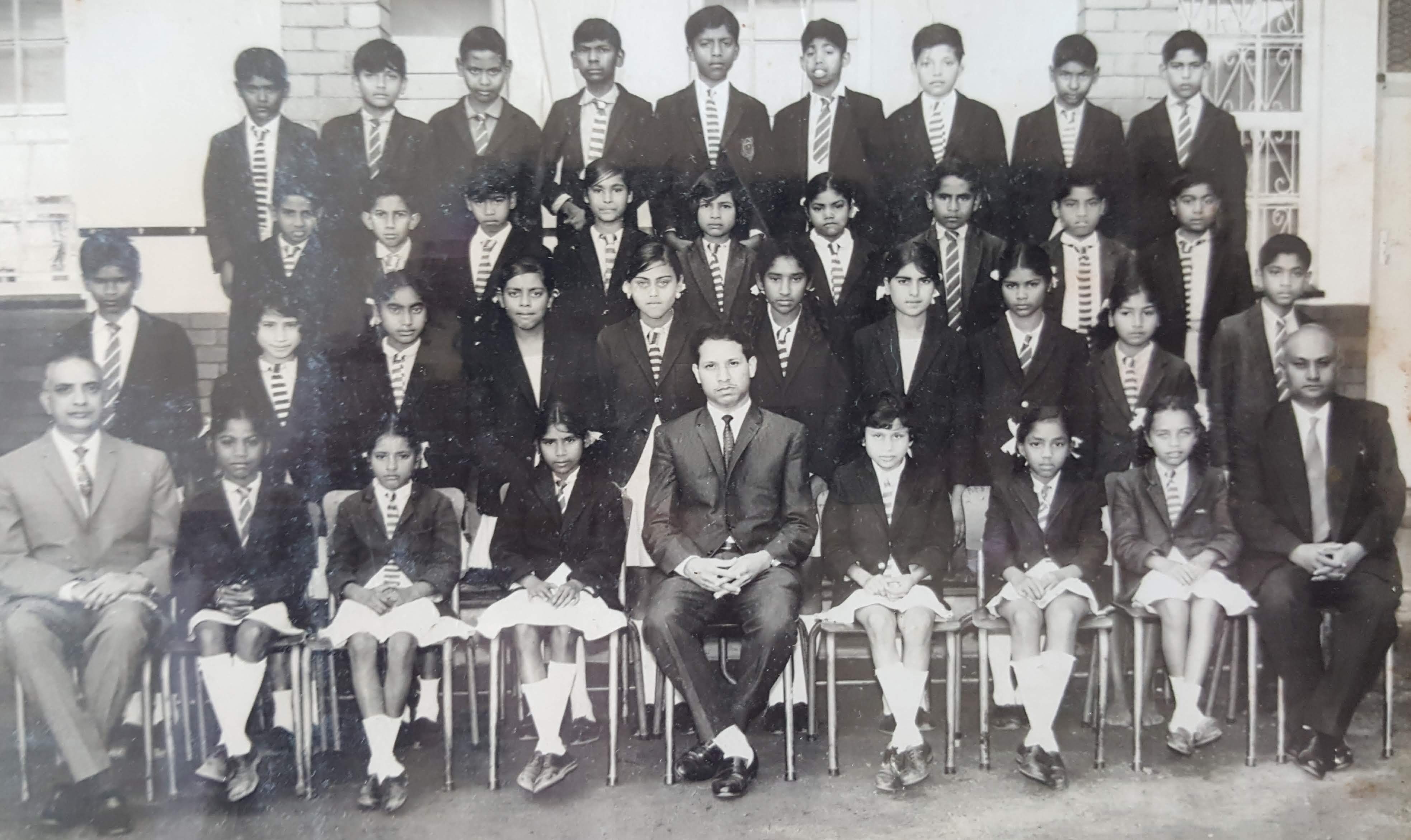
(Mustapha - second from right seated front row) with his class mates at the old Jhugroo Primary School. The teacher seen here is Ms I D Majaraj, who married Ken Rajoo, and the principal here is Mr Naidoo.) 


  Mr  Ismail Sayed while providing for the children, also involved himself with other residents in the building of the new Jhugroo School and in the Verulam Child Welfare Society. 

(  (One of the Sayed daughters, behind teacher Dhanraj Sivasanker, with her class mates at the new Jhugroo school).

All of the Sayed children attended the local Jhugroo Primary schools and continued their high school education at Verulam and Mount Edgecombe high schools.  


(Another school photo with one of the Sayed children.)


   (Another school photo) 


(Mustapha - second from left middle row - and Adam - extreme right middle row)

All the boys – Imam, Adam, Mustapha and Ahmed – became an integral part of the sporting and social sectors of life in Ottawa. They participated fully in soccer and also fishing. Many a time they were part of expeditions to the nearby sugar cane fields, playing soccer on the vast tract of river sand and swimming in the river at the bottom end of the Tin Town area.


(Adam Sayed - 4th from right - seen with Rusty Maharaj, Mohan, Steven Murugasen and Sam Murugasen at the old school ground. This property is now occupied by Globes shopping centre.)

Adam and Mustapha became household names in Ottawa for more than two decades because of their sporting and social interaction with the rest of the young people in Ottawa.

Over time, most of the Sayed children went onto lead independent lives after starting work and getting married.

(Mustafa - right standing - with family members)

Imaam settled in Ladysmith in northern KwaZulu-Natal after marrying; Adam, who joined his father at Grafton Everest, moved to Overport in Durban after tying the knot; Mustapha, who also worked at Grafton Everest, remained at the Ottawa home till his passing a few years ago; and Zain Ahmed, who worked for Encyclopaedia Britannica, moved to Johannesburg.

(One of the Sayed family photos)

Of the girls – Amina got married and settled in Riverside in Durban; Gori married and settled in Phoenix but later moved to California in the United States; Rookaya married and settled in Mobeni Heights and Sheriffa married and settled in Overport.


(Gori and her cildren in California in the United States)

Today (Dec 14 2022) the only surviving members of the tightknit Sayed family are Gori, who has settled in the United States; Rookaya, who stays at the Ottawa house; and Sheriffa, who stays in Overport.

The Sayed children have produced 15 grand-children and four great-grand-children. Of the grand-children, two adult sons of Amina Bibi Cassim stay at the far end of Maharaj Road in Ottawa. They moved to Maharaj Road more than two decades ago.

“Our roots are in Ottawa and our family members are proud to have been associated with the early residents of the village. The life we led then will be difficult to resuscitate today.”

                                                             (One of the Sayed wedding photos)


According Zubee Ismail, their historical home at number 7 School Road, has been bestowed to the three children of their youngest brother, Zain Ahmed. But because the children are based in Johannesburg, they have decided to sell the house.

“This will be a sad day for all of us because the house was built on a property that my parents and the children had stayed in for nearly 90 years.” - Ends – subrygovender@gmail.com Dec 14 2022


ABOO THIRUMALAI PADVATTAN FAMILY HISTORY – FROM THE OTTAWA ESTATE SUGAR CANE FIELDS TO FOOTBALL STARDOM


ABOO THIRUMALAI PADVATTAN FAMILY HISTORY – FROM THE OTTAWA ESTATE SUGAR CANE FIELDS TO FOOTBALL STARDOM


(Aboo Padvattan - second from right wearing hat - seen here with his father,  Doorsamy Padvattan,  mother, and brothers and sisters) 

ABOO WAS PART OF THE PADVATTAN DOORSAMY FAMILY OF OTTAWA ESTATE WHOSE GRAND-PARENTS HAD COME DOWN TO THE FORMER NATAL COLONY FROM TAMIL NADU IN SOUTH INDIA TO TOIL AS INDENTURED LABOURERS


(Aboo and his wife, Sindha, in their younger days)


                                                           By Subry Govender


One of the young men who emerged from the local sugar estate to become a top-class footballer for Ottawa in the late 1960s and 1970s and 1980s was none other than Aboo Thirumalai Padvattan.

Aboo, as he was popularly known, dominated the sport in the junior and senior levels and represented the village as a member of the Ottawa F C and the Ottawa United Football Club in tournaments held in Verulam, Tongaat, Mount Edgecombe and Durban.


(Aboo Padvattan - seen here in the Ottawa F C team. - no. 3 (from left) bottom row -. His brother Soobrie is also in the team.)


Even during his senior years, Aboo used to be seen practising with younger footballers in Riet River and other football grounds.


(Aboo Padvattan - no. 1 front row - as a member of the Ottawa United FC.)

His brothers – James and Soobrie – were also well-known for their football prowess. They also represented Ottawa and other local teams in tournaments organised by the Verulam Football Association. Two other younger brothers - Thomas and Sadha – were also involved fully in football.


(Aboo Padvattan (right) with a friend attending the annual Kavady ceremony at Riet River)


Aboo and his brothers were part of the well-known Padvattan Doorsamy family who worked and stayed in the neighbouring Ottawa Sugar Estate in the early years prior to the 1960s.

Mr Doorsamy’s parents settled in the Ottawa Sugar Estate after arriving from a village in Tamil Nadu in India in the 1880s.

They first toiled as indentured labourers like thousands of other families.

Mr Doorsamy, who was a first-generation descendant, and his wife, were parents to Aboo, who was the second eldest, and six other children.

The other children were James, who was the eldest, Soobrie, Ugie, Thomas, Sadha and Ragini.

Aboo, James and most of the other children joined their parents to work at the sugar estate during their early years while they were still at school.

They and their parents began to move out of Ottawa Estate and settled in Ottawa since the late 1960s after completing their primary school education and starting their married lives.

In addition to being involved in football and working in the sugar cane fields, Aboo, his brothers and sisters joined their father, Doorsamy Padvattan, in taking an active part in cultural activities in the sugar estate and in Ottawa. They were especially known for their performances in six-foot dance dramas at the Ottawa Sugar Estate during the annual Easter Festival period.

(Aboo's wife - Sindha)


Aboo, who started work as a handyman for a company known as Southern Life Properties in Durban, married his sweetheart, Sindha, also from the Ottawa Sugar Estate.

Sindha worked as a machinist for Flash Clothing Manufacturers at this time.

The young couple soon started their own family and began to build their lives despite the harsh economic conditions and the lack of comfortable and adequate housing.

                                               (Aboo's daughter, Rani Ramroop who I spoke                                                                                   to about their lives in Ottawa)


I interacted with Rani Thirumalai Ramroop, who is Aboo and Sindha’s second daughter, about their family.

According to Rani Ramroop, her parents had a tough time trying to find accommodation in Ottawa.

Their first place was a small room behind Hoosen Hans’s store which they used as a kitchen and bedroom. Then they moved further inside the area where they found a two-bedroom house which was partitioned off so that they could share the house with another tenant, known as Steven Pandaram and family.

Rani Ramroop says from there they moved to Jungbahadur Road where they rented a house for a few years.

“Then to Maharaj Road, from there to Candis Drive and back to Maharaj Road. Finally, we moved to Chelsea Gardens, Parkgate in Rietriver and lived there since 1996.”

For Aboo and his family, Ottawa was a “home” that they would not trade for any other place.

All the residents related to one another with respect and there was unity and closeness despite different cultures and languages.

Speaking about how her father, Rani Ramroop, says her father made the most of his life in Ottawa.

“HE PLAYED SOCCER FOR OTTAWA UNITED IN HIS EARLY DAYS AND SPENT LOTS OF TIME WITH HIS FRIENDS – ADAM, MUSTAPAHA, CHOCKS, BEN and UNCLE PARSU AND MANY OTHERS.

“They would play cards in our veranda every Friday and I remember they would leave some change for me under a newspaper on the table.”

About her mum, Sindhi, who worked as a machinist at Flash Clothing Manufacturers, Rani Ramroop says her mother spent most of her time working and taking care of their three children – Venilla, Jace and herself. 

“My mom was well-known for her kindness, friendliness and also for her religious beliefs and being the first woman in Ottawa to pull the chariot during Kavady prayers for more than 10 years. My mom passed away on August 5 2012 of cancer and my father on September 9 2021 of natural causes.”

Rani Ramroop recalls that they, as small children and teenagers in Ottawa, they would regard all their neighbours as “being part of one family”.

Because they did not have television, their neighbours would allow them to sit in their yard and put on a movie for them to watch. They would also visit the home of Mr Hans Hoosen to watch TV.

They would also walk to the Polo ground with their father and his friends to watch Polo matches on a Sunday. They would also watch squad car racing across the railway lines.

When they became teenagers, Rani Aboo married  Ashwin Ramroop from Ottawa and Venilla married Robin Basdev, also of Ottawa. Her brother, Jace, is married to Veena.

After the passing of their parents, Rani Ramroop moved to Everest Heights in Verulam, her sister, Venilla, settled with her family in Effingham Heights in Durban, and brother, Jace, has settled with his family in Newlands West.

Rani says life in Ottawa was unforgettable because of the “friendliness and neighbourliness” of all residents who lived like “one huge family”.

“I can honestly say that the people we lived and interacted with were truly one family. When people started moving away, Ottawa had changed and had not been the same. What we had then was friendship, love and togetherness.

“I miss those days that people lived in, in Ottawa. I was little then but what a wonderful place it was.”

The extended Padvattan Doorsamy family number more than 100 and go into six generations. Most of the younger generation have taken advantage of the sacrifices made by their parents and today have entered the medical, educational, academic, property and legal fields. At least one of their fourth-generation cousins has migrated to Australia with his family.   - ends. subrygovender@gmail.com JANUARY 17 2024