Tuesday, April 7, 2015

OUR RICH CULTURES AND TRADITIONS MAINTAINED AND PROMOTED ALSO DURING THE ANNUAL EASTER WEEKEND


(Statues to remember our indentured forefathers and mothers at Mt Edgecombe Mariammen Temple. A star attraction during the Easter festival)


THE VALUES AND PRINCIPLES OF OUR INDENTURED FOREFATHERS AND MOTHERS BROUGHT TO LIFE DURING THE EASTER FESTIVALS


 (Some of the tens of thousands of people who visited the Shri Mariammen Temple site during the Easter weekend)


                                                             By Subry Govender

Hundreds of thousands of descendants of indentured sugar cane labourers have once again visited religious places and institutions and participated in spiritual upliftment programmes at various venues throughout the country during the 2015 Easter weekend.
The people took part in ceremonies, started by their forefathers and mothers, at the Isipingo Temple, south of Durban; Mount Edgecombe Mariammen Temple, north of Durban; at the Brake Village Temple in Tongaat, on the north coast; at the Riet River Shri Emperumal Temple in Ottawa; at the Hara Krishna Chariot Festival in Durban; and also at churches.
The visit to the temples and the participation of the people in various spiritual programmes is understood to have started in the early years after our forefathers and mothers arrived to work as indentured labourers (slaves) on sugar estates on the north coast and south coast of the then Natal Colony.
According to various historians, when the sardars and owners of the sugar estates took time off to go to churches during Good Friday and the rest of the Easter weekend, the majority of our indentured ancestors dedicated the Easter weekend to visit religious sites at Isipingo, Mount Edgecombe, Tongaat, Stanger, Illovo, Umzinto, Port Shepstone and other areas where they had been indentured.
At the same time, those indentured labourers who followed the Christian faith visited religious sites of their own.
This tradition has continued, prospered and grew since then and over the decades to become an annual pilgrimage for most people during the Easter weekend. At one time in the 1950s, 1960s, 1970s, 1980s, and 1990s this annual pilgrimage to Isipingo and Mount Edgecombe used to attract more than 500 000 people. But since the dawn of democracy in 1994 when many thousands of people began migrating to the Johannesburg-Pretoria region; Cape Town; other regions of the country and to overseas countries such as Canada, United States, New Zealand, Australia, United Kingdom, and other parts of Europe, the attendances began to drop.
But despite the new patterns in lifestyles, the spiritual pilgrimages have still continued and Easter weekend in 2015 was no different.


(Devotees offering prayer at the Shri Mariammen Temple iin Mt Edgecombe during the Easter weekend)


(Stalwarts of the Young Springboks Football Club and the Mount Edgecombe Sporting Club who are reviving the spirit of the old Matra Cotrie)


The people I spoke to at some of the pilgrimage sites re-iterated their commitment to promoting their rich cultures and traditions started by their indentured ancestors.
"Our visit here and participation in the religious ceremonies is a source of spiritual upliftment for all of us," said Mr Nanda Govender, who visited the Mount Edgecombe Mariammen Temple.
Despite some moments of rainy weather and inclement weather, the tens of thousands of people, in addition to offering their prayers at the newly-upgraded temple, also enjoyed the musical entertainment that was provided throughout the four days of the Easter weekend. They also purchased music, movie, Eastern clothing and other items from the numerous shops in the festival grounds.
Mr Danny Maharaj, 65, who was born in the Mount Edgecombe sugar barracks, said he would never forget the joy and happiness that they used to enjoy in their early days.
"It's for this reason that I visit this place every year so that I could recall the wonderful lives that we used to live in this area," he said.
"The religious sites are our roots and we must never forget where we come from. By visiting this place I bump into a lot of people who I have not met for many, many years.
"O'h the thousands of people who come here annually remind me of the early days," he said.
Former members of the Young Springboks Football Club and the Mount Edgecombe Sporting Club were also busy at a special booth they had set up. They want to revive the spirit of the past and to honour those who contributed immensely to soccer and sports in general in the Mount Edgecombe sugar barracks.


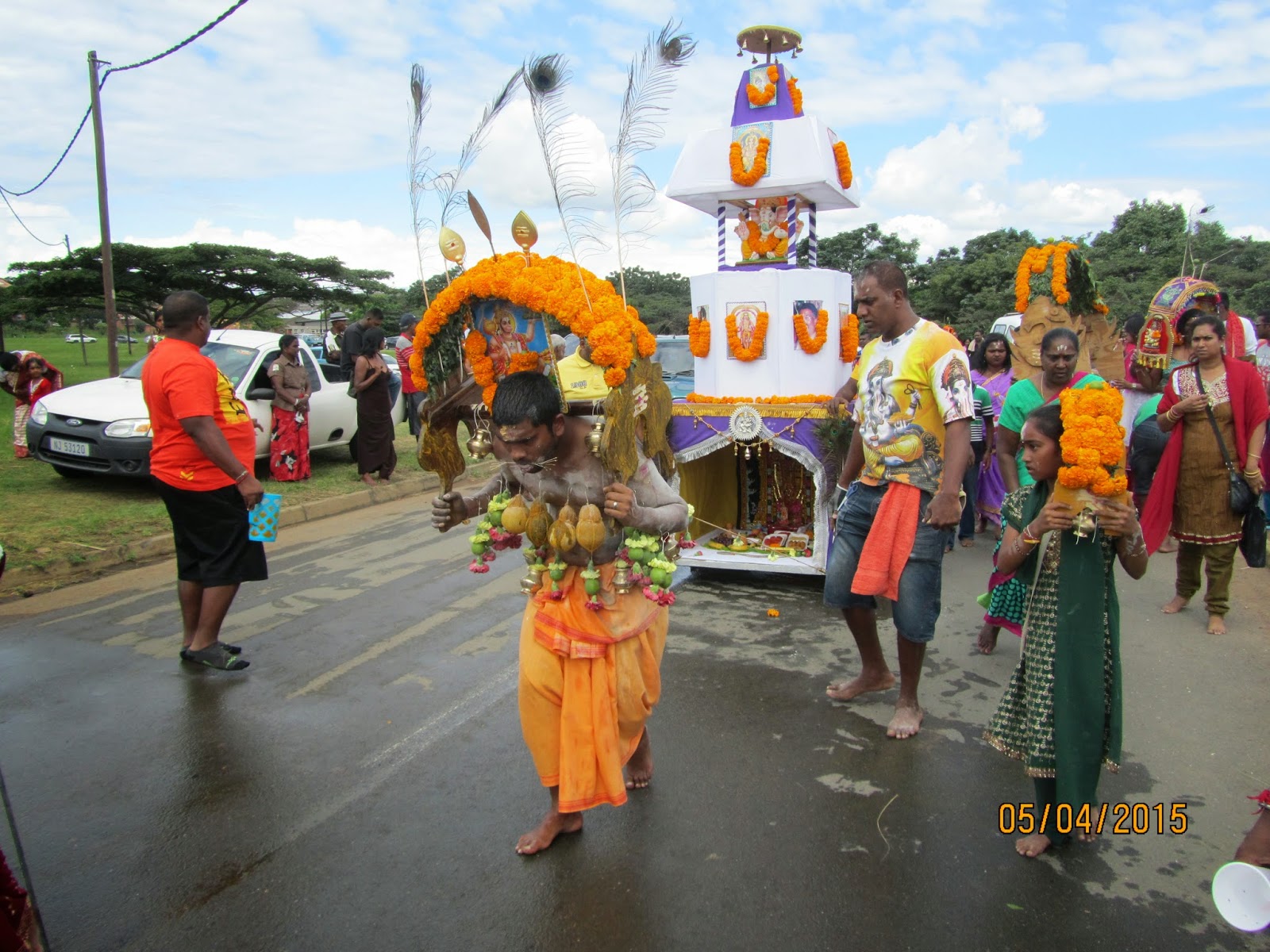
(Devotees at the Kavady Festival in Riet River (Ottawa) during the Easter weekend)


(Devotees at the Kavady Festival in Riet River (Ottawa) during the Easter weekend)
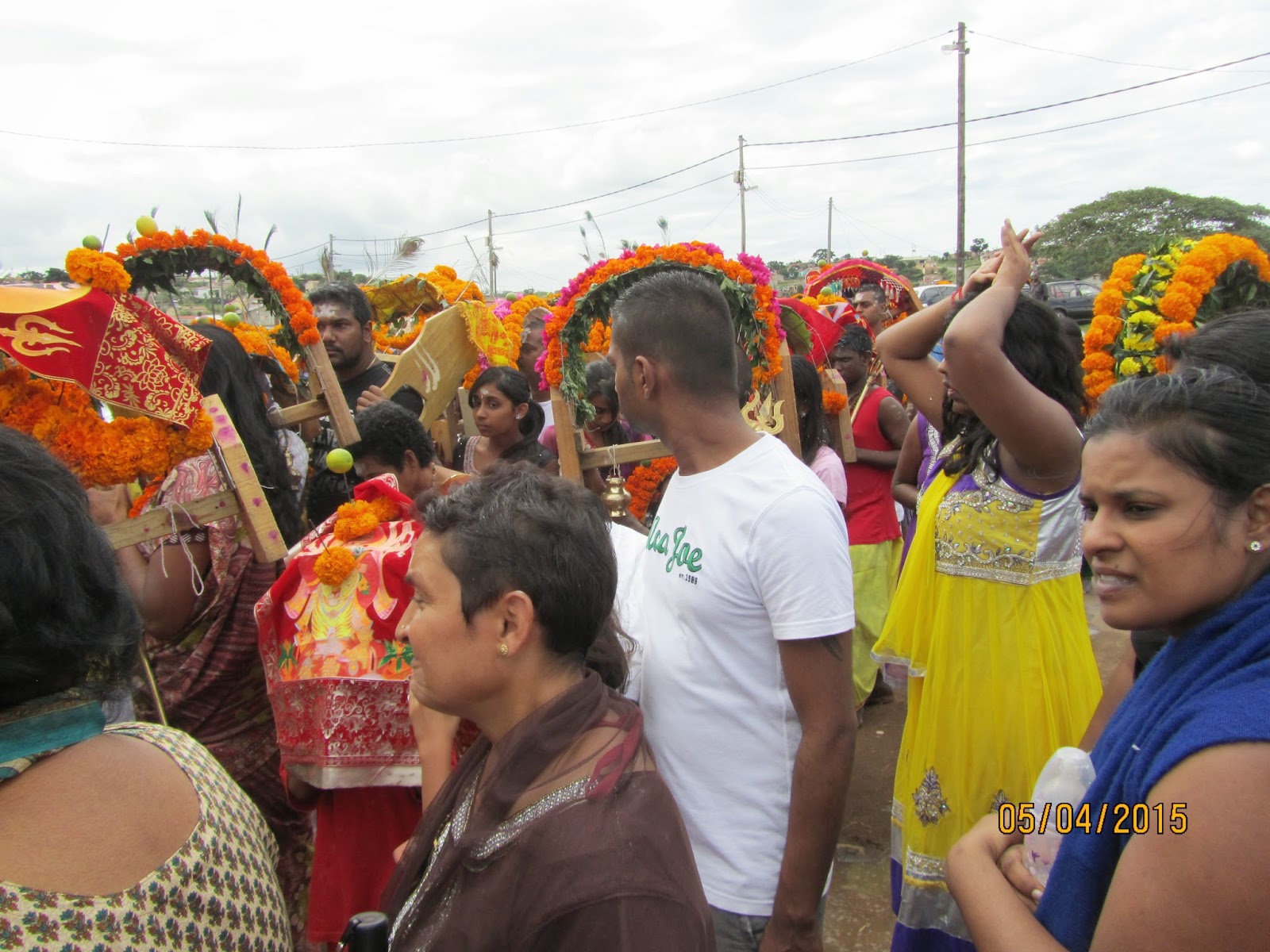

          (Mr Aboo Padvattan and a former resident of the Ottawa Estate sugar barracks at the Kavady ceremony)

 
Mr Aboo Padvattan, who attended a Kavady ceremony at Riet River in Ottawa, was also proud of the cultures and traditions started by his ancestors.
"Most of the people who are settled in this area are families who worked on sugar platantions at the Ottawa Estate, Blackburn, and other sugar estates in this area," he said.
"We are extremely happy to see so many people come year on an annual basis to participate in this Kavady ceremony.
"This ceremony brings us happiness, joy, and spiritual upliftment," he said.


(Mr Muthen is a former resident of School Road in Ottawa who is a senior official of the Riet River Temple)

Mr Muthen, a resident of Ottawa, now plays a very vital role in the Riet River Temple kavady.
He said as a descendant of indentured sugar cane labourers he wanted to play a role in promoting the cultures, traditions, music, and spirituality of his ancestors.
"We must be proud and appreciate the sacrifices made by our forefathers and mothers," he said.
"We have come a long way from the sugar cane fields and have achieved a great deal in all spheres of life. It is, therefore, vital that we must at every opportunity promote our customs, traditions, cultures and spirituality."
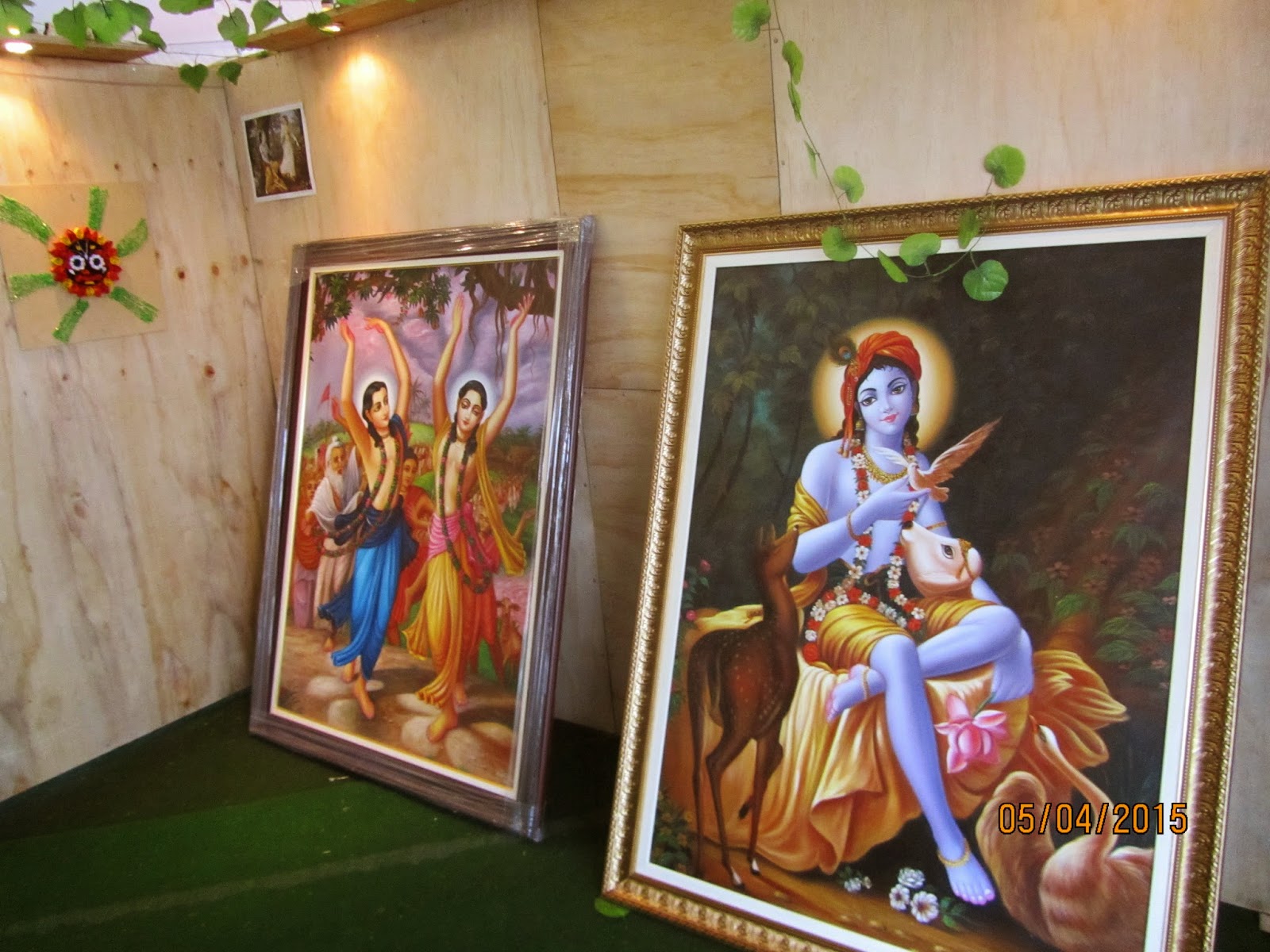


The Hare Krishna festival in Durban is not as traditional as the pilgrimages to Isipingo and Mount Edgecombe. But, never the less, this annual festival also keeps alive our rich cultures, traditions, history and spirituality.
Here I met a group of four young professionals who re-iterated their love for their rich traditions.


"We find that this type of pilgrimage promotes the good in all people," said one of the young men, who said they were from the town of Verulam on the North Coast.
"There's a lot of things for people to do here, especially participating in programmes promoting peace of mind and spirituality."


The people I spoke to say the  visit  to religious sites and participation in spiritual programmes during the Easter weekend is a tradition that has become part and parcel of the lives of descendants of indentured labourers. It's a tradition, they say, that will grow and prosper for ever and ever.
"This is a tradition that is our way of paying tribute to our indentured ancestors," said one of the people who visited the Mount Edgecombe festival.


Mt Edgecombe Easter pictures 6 - 4 - 2015


Mt Edgecombe and Hare Krishna pictures 6 4 2015


Monday, March 30, 2015

OUR RICH HISTORY - BILLY NAIR PROPOGATED UNITY - PART THREE

OUR RICH HISTORY - BILLY NAIR  PART THREE


One of the doyens of the liberation struggles was Billy Nair, the son of indentured labourers, who was imprisoned on Robben Island for 20 years for fighting against white minority rule and domination. After his death at the age of 79 on October 23 2008, Subry Govender compiled a three-part series as a special tribute in honour of this struggle icon.
We publish the three reports as part of our information for those who are interested in learning about OUR RICH HISTORY. This is Part 3......


(Billy Nair (left) in a Natal Indian Congress message with George Sewpersadh)


By Subry Govender

On Friday, 14th November 2008 hundreds of Billy Nair's comrades and struggle friends gathered at the Shree Veerabraga Emperumal Temple Hall in Tongaat on the KwaZulu-Natal north coast to hold a memorial service in his honour.
Among those who paid special tributes to the struggle icon who was imprisoned for 20 years on Robben Island included the Deputy leader of the ANC in KwaZulu-Natal, Willis Mchunu; Yusuf Bhamjee,  a member of the provincial executive member of the ANC and former Natal Indian Congress activist, Swaminathan Gounden.
There were also former activists of the calibre of Pravin Gordhan, who was the Receiver of Revenue at that time; former Robben Island prisoner, Sunny Singh; and Paud Devadas David, who was a former leader of the Natal Indian Congress.
The memorial service was held only a day after  new developments that saw struggle stalwart,  Professor Fatima Meer, throwing her weight behind the breakaway, Congress of Democrats, which later became of the Congress of the People(COPE).
One of its leaders, former defence minister,  Mosioua Lekota, ws in Durban to gain Professor Meer's support. Lekota also held talks with other former activists.
During his life time and after he was released from Robben Island in February 1984, Blly Nair constantly spoke out against personality  differences and factions within the progressive forces. There's no doubt that if he was alive today he would have spoken out boldly in favour of unity and called for comrades to resolve their differences.


(Students at UDW saluting Billy Nair)


(Students at UDW in 1985 listening to Billy Nair)


              "Close ranks, unite as never before"
                         
He made this call when he spoke at a protest meeting at the University of Durban-Westville in 1985:
"Here I want to emphasise this and I am making this call in all seriousness," he told the students. We must not point fingers and say hey you UDF, hey you AZASM, but for us to close ranks. There is need for us not to engage in debates or polemics not to split hairs from grassroots right up to leadership level.
"Close ranks, unite as never before. Bring all democratic forces - white AND BLACK - african, coloured, Indian and white - the trade unions , womens organisations, political, non-political, church whatever. All those opposed to apartheid should close ranks and unite"


(A brave photographer (I forget his name) taking pictures of riot police action against protests headed by Billy Nair and other NIC leaders)


PUPPETS SHOULD BE SHOWN THE DOOR


 (Police keeping watch on anti-apartheid activists during an address by Billy Nair and other NIC leaders)

Billy Nair would have reminded the comrades what the struggle was all about:
"We have reached a situation where we have to decide whether we are going to allow this government and its puppets to continue to rule over us. The time has come when we have to stop it. We have to embark on determined efforts to remove this regime from power before it causes more destruction."
Most former activists are currently involved in a programme to unite the progressive forces. The rank and file are hoping that they will live up to the morals, values and principles set by leaders of the calibre of Billy Nair. - ends: subrygovender@gmail.com

BILLY NAIR - A STRUGGLE STALWART WHO COMMITTED HIMSELF TO FIGHT FOR A FREE AND NON-RACIAL DEMOCRACY TILL HIS LAST BREATH.


OUR RICH HISTORY - BILLY NAIR

One of the doyens of the liberation struggles was Billy Nair, the son of indentured labourers, who was imprisoned on Robben Island for 20 years for fighting against white minority rule and domination. After his death at the age of 79 on October 23 2008, Subry Govender compiled a three-part series as a special tribute in honour of this struggle icon.
We publish the three reports as part of our information for those who are interested in learning about OUR RICH HISTORY. This is Part 2......


By Subry Govender

Six months after his release in February 1984 from 20 years on Robben Island,  Billy Nair was again detained, tortured and brutalised for opposing the tri-cameral elections. The tri-cameral elections were some of the devious plans by the former apartheid regime to co-opt the coloured and Indian-orign communities.
Billy Nair took his case to the High Court and succeeded in winning his release from detention.


THREE MONTHS AT THE BRITISH CONSULATE IN DURBAN


He, thereafter, took refuge at the British Consulate in Durban along with Mewa Ramgobin, M J Naidoo, Archie Gumede and Paul David. All these leaders were activists of the Natal Indian Congress(NIC), the Release Mandela Committee(RMC), the United Democratic Front(UDF) and other progressive organisations.
Nair spent three months at the Consulate and soon after he walked out of the consulates office in December 1984,  I spoke to Billy Nair about the political struggles at that time.

          BRUTALISED BY SECURITY POLICE

I asked him about the brutalisation he suffered at the hands of the then dreaded security police.
"In the first place six months after I was released from Robben Island I was actually detained for opposing the tri-cameral elections," he told me. "After four months of detention and my stay at the Consulate with my colleagues I was released. "This indicates clearly that the state was persecuting me. Whenever I came into the custody of the special branch I was assaulted. "There's a charge of assault pending against the police who assaulted me. I was assaulted and subjected to quite humiliating experience in prison and one could say that I was subjected to it was a quite a torrid experience."


                      STRUGGLE WILL CONTINUE


Billy Nair showed no signs of being beaten by the brutal actions of the apartheid regime. Instead he re-iterated that as long as the National Party regime at that time refused to negotiate with the authentic and real leaders of the people, the struggle will continue.
"As long as the National Party Government remains intransigent and refuses to meet the authentic leaders of the people," he said, "the unrest will naturally continue and what I urge the National Party Government and all those at the helm of power and and the powers that be is to come to their senses and negotiate and discuss with the authenthic leaders of the people to resolve the problems of the country".

                     UNITED DEMOCRATIC FRONT


The United Democratic Front, of which Billy Nair was a senior leader, was facing a crisis at this time because of the widespread detentions of thousands of leaders and activists around the country and the charges of treason brought against most of the top leaders.  But Billy Nair was unruffled. He was of the view that as long as the UDF was the authentic voice of the people, it would continue to operate. This, despite the oppressive actions of the then apartheid regime.
"The setback the UDF and its affiliates suffer at the moment will make them to re-group because, after all, an organisation is not founded on futile principles but an organisation which is found on firm basic principles with widespread support of the massive of the people it has the support of 30-million people. An organisation like this will prove invincible and emerge victorious and triumphant, not withstanding the present difficulties.


TOTAL REJECTION OF TRI-CAMERAL PARLIAMENT


Billy Nair also totally rejected any form of association with the regime's tri-cameral parliamentary offer to the coloured and Indian-orign communities. He made it clear that he would struggle on for a non-racial and free South Africa till his last breadth.
"The democratic loving people, the people who want democracy and freedom urge the white minority government to sit and work out with people and not for the people. Not withstanding the repression that I have suffered and am suffering I will continue with the struggles for as long as I live. I will continue to struggle for a free and non-racial democracy for both black and white as long as I live."

                         
POLITICAL FREEDOM, NOT MONETARY GAINS


Billy Nair remained totally dedicated to the full political, social and economic emancipation of all South Africans ---  without expecting anything in return.  He had followed in the footsteps of many other great freedom leaders. One hopes that Billy Nair's rich life will not be lost now that he's no longer with us. The younger generation must be able to learn from the unselfish lives of Billy Nair and scores of others.  - ends: subrygovender@gmail.com